
Check what a pokie’s return rate can—and can’t—tell you
A guide to return settings, operating hours, venue checks and the limits of online gambling protections in South Australia.
Table of Contents
- How Pokie Returns and Spins Are Determined
- When South Australian Gaming Machines Can Operate
- Finding a Venue Near an Airport or Other Destination
- Online Pokies and the Limits of Australian Consumer Protection
- Gaming Venues and Their Responsible-Gambling Duties
- Why Venue Opening Hours Need to Be Checked Separately
- What the Evidence Establishes About Crown and South Australia
- CBD Clubs and the Limits of Venue-Level Information
- Cashless Transfers and PayID: What the Facts Do—and Do Not—Show
- Age and Gambling-Safety Measures in the Australian Context
How Pokie Returns and Spins Are Determined
A pokie’s return percentage describes a statistical feature of the game, not a prediction of what will happen during a particular session. It is therefore distinct from the result of an individual spin. A published percentage cannot establish whether a player will win on the next turn, nor does it identify which game will produce the best result at a South Australian venue.
There is also a distinction between a game’s design and the setting used when it is offered. A specialist review reports that some providers give casinos a choice of multiple return-to-player settings for the same pokie. Where that option is available, one version of a game may have a different return percentage from another version elsewhere. The game’s name or appearance alone would not establish which setting is in use.
That reported possibility should not be treated as a universal feature of pokies. It applies where a provider makes alternative settings available and a casino selects among them. Without confirmation of the setting attached to a particular game, a comparison based only on its title cannot establish that two installations have the same return percentage. Nor does the information support a general ranking of pokies in South Australia by expected return.
Top operators
For players in South Australia exploring online pokies in 2026, the details behind each option can help inform a considered choice. This overview highlights the available facts for each listed operator.
-
DragonSlots Casino
- License
- Curacao Gaming Authority (Jumpman Gaming Ltd)
DragonSlots Casino is listed with a Curacao Gaming Authority license held by Jumpman Gaming Ltd.
-
SpinsUp
- License
- Curacao Gaming Control Board OGL/2023/174/0082 (Dama N.V.)
SpinsUp is listed with a Curacao Gaming Control Board license, OGL/2023/174/0082, held by Dama N.V.
-
JeetCity Casino
- License
- Curacao eGaming (Dama N.V.)
JeetCity Casino is listed with a Curacao eGaming license held by Dama N.V.
-
Roby Casino
- License
- Curacao eGaming (Roby Games Ltd)
Roby Casino is listed with a Curacao eGaming license held by Roby Games Ltd.
-
Neospin
- License
- Curacao Gaming Control Board OGL/2023/176/0095 (Hollycorn N.V.)
Neospin is listed with a Curacao Gaming Control Board license, OGL/2023/176/0095, held by Hollycorn N.V.
-
Rollero Casino
- License
- Curacao Gaming Control Board OGL/2023/176/0095 (Hollycorn N.V.)
Rollero Casino is listed with a Curacao Gaming Control Board license, OGL/2023/176/0095, held by Hollycorn N.V.
-
Kingmaker
- Payout speed
- crypto ~90 minutes, fiat 1-5 days
- Min. deposit
- A$30
Kingmaker lists crypto payouts at around 90 minutes and fiat payouts at 1–5 days. Its minimum deposit is A$30.
-
SkyCrown
- License
- Tobique Gaming Commission
- Payout speed
- crypto ~10-15 minutes, fiat 1-5 days
- Min. deposit
- A$30
SkyCrown is listed with a Tobique Gaming Commission license. Crypto payouts are listed at around 10–15 minutes, fiat payouts at 1–5 days, and the minimum deposit is A$30.
-
Ricky Casino
- Payout speed
- crypto under 1 hour, PayID 1-3 business days
- Min. deposit
- A$20 (A$30 to qualify for the bonus)
Ricky Casino lists crypto payouts in under an hour and PayID payouts in 1–3 business days. The minimum deposit is A$20, or A$30 to qualify for the bonus.
-
Thor Casino
- License
- Curacao – Antillephone N.V. (Versus Odds B.V.)
- Min. deposit
- EUR 20
Thor Casino is listed with a Curacao license from Antillephone N.V. (Versus Odds B.V.), and its minimum deposit is EUR 20.
The return percentage is most useful as a long-run measure of the game’s mathematical design. It does not function as a schedule for distributing wins. A higher stated return does not mean that a win is due after a sequence of losses, and a lower one does not mean that a particular spin must lose. The percentage gives no reliable forecast for the outcome of a single play.
Each spin is generated separately through a Random Number Generator (RNG). In practical terms, the result of one spin does not determine the result of the next: an earlier win or loss does not make a later result more or less likely. A sequence that appears unusually favourable or unfavourable can occur without changing the mechanism governing the next spin. The apparent pattern is not evidence that the game is compensating for previous results.
This independence matters when interpreting claims about “best-paying” pokies. A short run of outcomes cannot show that a game has a higher return percentage, just as a run of losses cannot establish that a win is imminent. Individual experience records a limited set of random outcomes; it does not reveal the selected return setting or provide a dependable measure of the game’s long-run behaviour.
Comparisons also need to keep like with like. If two venues offer the same named pokie, the title alone may not confirm that both use an identical return setting. Conversely, a different result during play does not by itself prove that the settings differ. The setting and the random outcomes are separate considerations: the former can affect the game’s stated return, while the latter determine the result of each individual spin.
For South Australian players looking at casino pokies, this distinction narrows what can reasonably be inferred from a game label or a brief playing history. A title may identify the game, but it does not necessarily disclose its configured return percentage. A few spins can show what happened in that session, but cannot establish the game’s expected return. Claims about which pokies pay best therefore require information about the relevant setting, rather than reputation, recent results, or the impression created by a short sequence.
The same reasoning applies to references to online pokies: a game’s name does not, by itself, identify the return setting used by a particular operator. The mechanisms described here explain how configured return and individual randomness differ; they do not make a specific game, venue, or platform a reliable source of winnings. A return percentage is a statistical property, while every spin remains a separate random outcome.
When South Australian Gaming Machines Can Operate
A rule about staffing while gaming machines are in use does not, by itself, set the hours when those machines may operate. It also does not establish whether a particular South Australian venue is open at a given moment. These are separate questions: one concerns a requirement that applies during machine operation; the other concerns the opening arrangements of an individual venue.
A report by regionriverina.com.au describes a requirement taking effect from 1 July: a venue operating more than 20 gaming machines must have a dedicated responsible gambling officer (RGO) on duty whenever those machines are running. The condition is tied to machine operation, rather than simply to the venue being open. It therefore concerns staffing during gaming activity, not a general opening time for venues across South Australia.
That distinction matters when interpreting requests for information about pokies being open early, late or “now”. The reported requirement does not say that machines may start at a particular hour, must stop at a particular hour, or operate whenever a venue is open. Nor does it establish the current status of any particular venue. A venue’s opening arrangements cannot be inferred from the RGO rule alone.
The threshold in the report is also specific. It applies to venues with more than 20 gaming machines, rather than establishing the same staffing condition for every venue regardless of its machine count. The stated condition is that a dedicated RGO be on duty while machines are operating. It should not be recast as a rule that applies only at certain times of day, or as evidence that a venue’s machines are available throughout its opening hours.

The report also describes a one-month grace period for venues to make the specified changes. During that period, venues were to remove signage and introduce responsible gambling officers. The grace period relates to implementation; it does not provide a separate schedule for machine operation or extend the hours during which a venue is open. Its practical significance is limited to the time allowed for venues to carry out those changes.
Accordingly, the reported start date and grace period should be read together, but not treated as a timetable for individual venues. They describe a requirement and a transition period, not a daily opening schedule. The wording does not identify a particular South Australian venue, confirm when its machines begin operating, or show whether they are operating at the time of a visit.
Searches for South Australian pokies open now, or for machines available at a specific early or late hour, call for venue-level information. The RGO requirement cannot answer those questions: it identifies a staffing condition during operation, not whether a venue is open at a particular hour. The same distinction applies to a venue that is open while its machines are not operating; the reported condition attaches to the period when the machines are in use.
The one-month allowance should not be mistaken for a continuing exemption or a statement about the present status of every venue. It is described as a grace period for implementing the changes. Whether an individual venue has completed them is not established by the general description of the rule. Likewise, the requirement does not provide a basis for assuming that every venue has the same operating arrangements.
Do
- Check specific venue-level information for opening hours
- Verify the current status of machines at a particular location
- Consult the venue directly for its daily operating schedule
Don't
- Infer opening hours from the RGO staffing rule
- Assume machines are open whenever a venue is accessible
- Use general staffing requirements as a timetable for play
In practical terms, the information supports a narrow conclusion: the reported RGO obligation is linked to gaming-machine operation at venues above the stated threshold, and a one-month period was allowed for venues to introduce officers and remove signage. It does not specify a universal start or closing time for pokies in South Australia. Venue opening and machine-operation times remain distinct matters, and the staffing rule should not be used as a substitute for information about a particular venue’s hours.
Finding a Venue Near an Airport or Other Destination
A request for pokies near an airport is a location question, not evidence that a venue is inside the airport or within a particular distance of it. “Near” can refer to a short walk, a drive, or a broader surrounding area. Those interpretations produce different results, especially where an airport serves locations spread across a large urban region. A venue’s presence in a general airport-area result does not establish that it is on airport grounds or convenient for a particular journey.
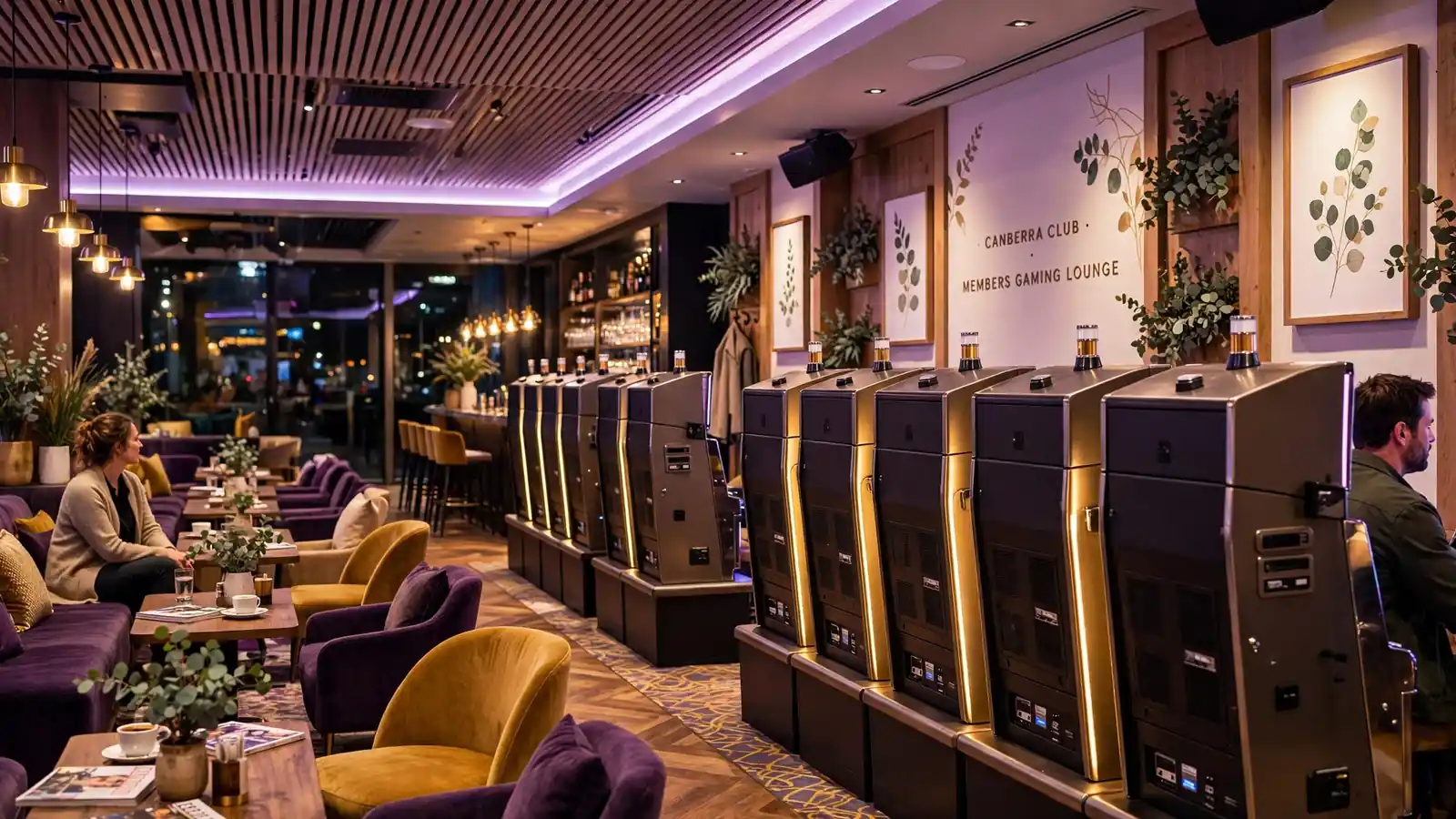
The same distinction applies to searches combining South Australia with a city centre, a central district or a northern area. These descriptions can refer to different geographic scales: a neighbourhood, a local centre or a wider part of the state. A result labelled “central” may not be close to a particular destination, while a result described as “north” may use a boundary different from the one intended. The place name and the exact venue address are therefore more informative than a broad regional label.
Location results also require attention to jurisdiction. A search that combines South Australia with “Victoria” may concern a cross-border area, a venue in one state, or a mistaken location label. The words alone do not identify which interpretation applies. Confirming the state attached to the venue address matters when comparing locations, since a nearby result may fall outside the intended state even when it appears in the same broad search area.
A similar ambiguity arises with “Parkes”. A place name by itself is not enough to determine which locality a result refers to or whether it belongs to the intended South Australian search. The address and its associated state are essential for resolving that ambiguity. Search-result titles and snippets can shorten or rearrange place names, so they should not be treated as a substitute for the venue’s own location details.
For a “near me” search, the displayed results depend on the location being used by the search service and on the radius applied to the results. That radius may not correspond to a meaningful travel distance. A venue that appears nearby on a map may still require a route that differs from a straight-line measurement; road access, transport options and the point of arrival can all affect the practical journey. Without a confirmed starting point and destination, a distance label cannot establish how accessible a venue is.
The useful comparison is therefore between identifiable addresses and the specific destination, rather than between broad labels. An airport-area search should be checked against the airport’s location and the venue’s address. A central-area search should be checked against the intended centre or district. State and locality details help distinguish a genuinely relevant result from one that shares only part of the search wording.
These checks establish geographic relevance, not whether a venue is currently open or whether its pokies are operating at a particular time. Those are separate questions and depend on information specific to the venue and the time in question. Keeping location, travel distance and operating status distinct prevents a broad map result from being mistaken for a confirmed nearby option.
Online Pokies and the Limits of Australian Consumer Protection
An online service offering real-money pokies to people in Australia falls under the Interactive Gambling Act 2001. The law prohibits companies from providing these services to Australians without a domestic licence, and no Australian licence for an online casino has been issued. In practice, there is no Australian-licensed online casino.
This distinction matters when assessing online play: the Act’s prohibition is directed at providers, not at individual players. Australians are not made criminally liable simply for playing on an offshore site that accepts them. That does not mean the service is authorised in Australia or that the player receives the protections associated with a domestic gambling licence. Offshore access may also be disrupted: the Australian Communications and Media Authority blocks illegal gambling sites, and internet service providers must follow its blocklist.
Searches for real-money play, high-stakes games or introductory offers do not alter the legal position of the operator. A site’s willingness to accept a deposit, or to display an offer, does not establish that it holds an Australian licence. Nor does the existence of a page aimed at South Australian customers indicate that the service is locally regulated. The underlying issue is whether an operator is providing prohibited interactive gambling services to people in Australia.
The legal and practical consequences of depositing funds are distinct. A person may be able to access an offshore service and place bets, but that access does not create a reliable route to resolve a dispute under Australian law. If the operator declines to release winnings, Australian players have no legal recourse in Australia against that offshore casino. The absence of a domestic online-casino licensing system leaves no Australian-licensed casino authority responsible for resolving such a payout dispute.
That limitation is particularly important when money is deposited before the terms of a site or its withdrawal process are understood. The fact that a service accepts Australian customers does not guarantee that it will honour a balance or pay winnings. Likewise, a promotional claim or a promise of generous play conditions should not be treated as evidence of enforceable protection. This is not a finding that every offshore operator withholds funds; it is a description of the narrowness of Australian recourse if one does.
The legal position therefore cannot be reduced to whether a site is reachable or whether a player can create an account. Operator conduct is prohibited, while the law does not impose the same liability on the player. Yet that distinction offers no assurance of consumer remedies when an offshore business controls the account and refuses payment. For South Australians considering online pokies, the relevant point is not that a local licensed option exists: it does not. Access to an offshore service and protection under Australian law are separate matters.
Gaming Venues and Their Responsible-Gambling Duties
Responsible-gambling obligations concern how a venue oversees its gaming operations and responds to signs of harm. They are separate from questions about where South Australian venues are located or which one might be considered the best.
A report by regionriverina.com.au says that, from 1 July, a venue with more than 20 gaming machines is required to have a dedicated responsible gambling officer (RGO) present while those machines are operating. The role is tied to the operation of the machines, rather than being described as a general staffing requirement for every venue at all times. The report therefore sets out a threshold-based obligation: venues above the stated machine count are covered by the RGO requirement, while the report does not say that the same dedicated role is required at venues below that threshold.
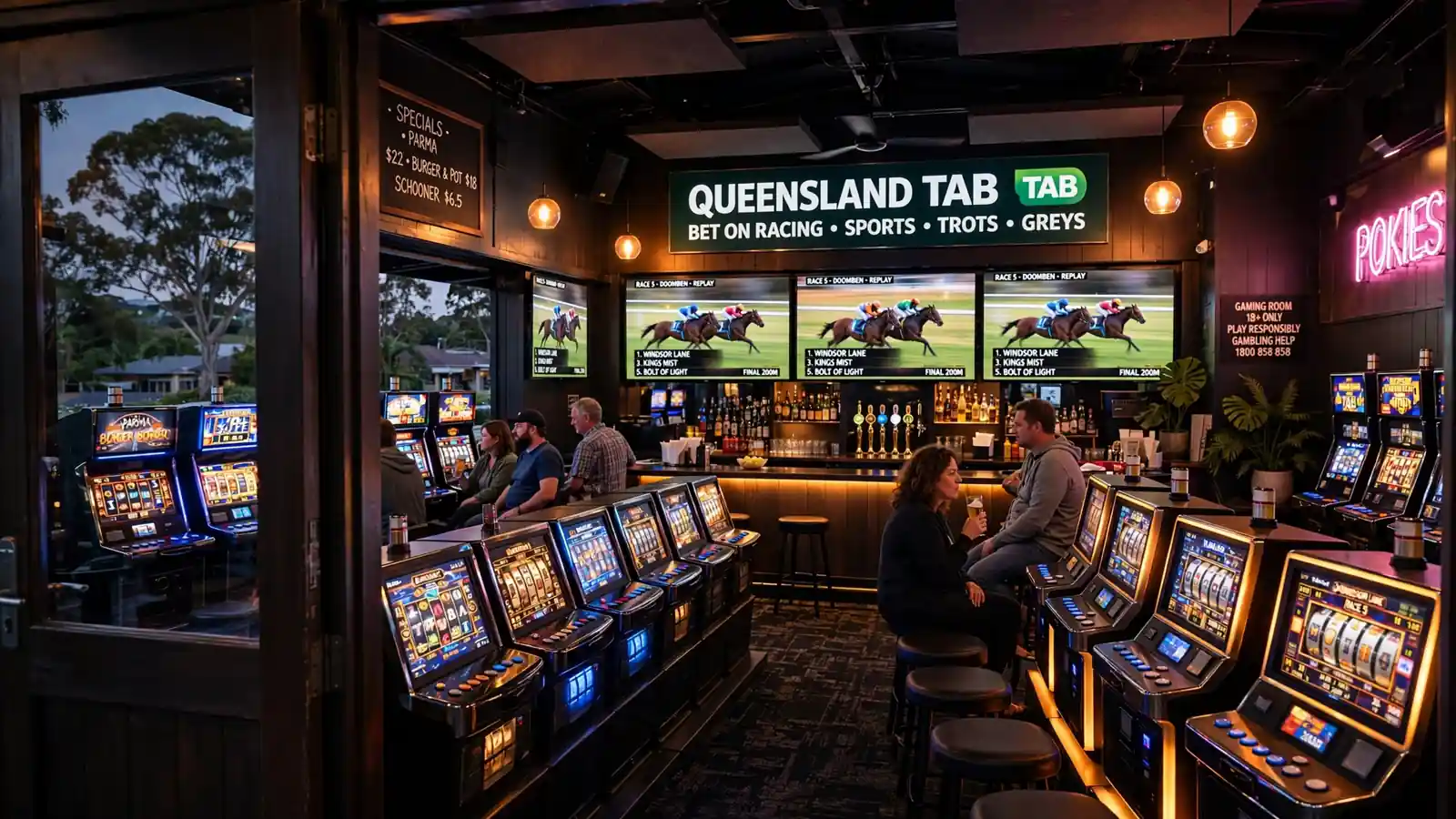
The RGO requirement is part of a broader focus on recognising and recording gambling-related concerns. The same report describes a requirement for venues to maintain a gambling incident register. The register is intended to capture details of relevant occurrences, including situations in which a patron’s behaviour suggests they may be at risk of gambling harm or already affected by it. This makes the recordkeeping obligation distinct from simply having an officer on duty: one concerns the presence of a designated staff member, while the other concerns documenting incidents.
These duties provide a limited basis for understanding oversight in South Australian pokies venues. They do not establish that every venue has the same number of machines, that every venue must appoint a dedicated RGO, or that the existence of a register demonstrates how a venue responds to a particular incident. Nor do they provide comparative information about compliance, staffing quality or outcomes for patrons. A claim that one venue is the best on responsible-gambling grounds would require evidence about those matters, not merely a description of the reported requirements.
The significance of the measures is therefore institutional rather than promotional. A designated officer can form part of a venue’s response while machines are operating, and an incident register can provide a record of concerning events. The reported requirements indicate what covered venues are expected to put in place; they do not, on their own, show whether those arrangements are applied consistently or how effective they are in preventing harm.
Why Venue Opening Hours Need to Be Checked Separately
A venue’s opening hours and the hours when its pokies are available are different details. A building may be open for dining, accommodation or other services without that establishing that its gaming area is operating. Conversely, a listing that describes gaming hours does not by itself confirm when the wider venue is accessible. Treating these schedules as interchangeable can therefore produce an inaccurate picture of what is available at a particular time.
This distinction matters when assessing claims about round-the-clock pokies in South Australia. A venue described as open late, or as operating continuously, should not automatically be understood to offer pokies throughout those hours. The relevant question is whether the machines themselves are operating at the stated time. General venue hours and gaming-machine hours need to be read as separate pieces of information.
A reported requirement provides one indication of why machine-operation times have their own significance. According to a report published by regionriverina.com.au, from 1 July a venue operating more than 20 gaming machines is required to have a dedicated Responsible gambling officer (RGO) on duty during the period those machines are running. The condition is tied to machine operation, rather than simply to whether the venue’s doors are open. It does not, on its own, establish a venue’s opening schedule or mean that machines operate whenever the venue is accessible.
For searches about South Australian pokies opening hours, a precise schedule should identify the gaming machines specifically, rather than give only the venue’s general trading hours. Information labelled “open now” can also refer to the venue as a whole and may not resolve whether its gaming area is active. Checking the two schedules independently avoids treating one as proof of the other.
The same distinction applies to statements about 24-hour access. Continuous venue access, where stated, is not sufficient evidence of continuous machine operation. Nor does a rule governing staff presence while machines are running establish that a venue operates all day. The requirement describes what must apply during machine operation; it is not a timetable.
Accordingly, claims about 24-hour pokies venues in South Australia need to be interpreted narrowly. Venue availability and gaming-machine availability are related but separate conditions. A schedule for one cannot safely be used as a substitute for the other, and the wording of any hours notice matters: it should make clear whether it refers to the venue or to the pokies.
What the Evidence Establishes About Crown and South Australia
A Crown-branded casino and a South Australian gaming venue are not interchangeable descriptions. The name alone does not establish that a Crown casino, or a room of Crown pokies, is located in South Australia. Venue identity and location need to be established independently before details about machines or facilities can be attributed to a particular place.
This distinction matters for searches combining Crown with South Australia. A result that mentions the state and Crown in the same context may refer to separate locations, travel, or general discussion rather than a venue within the state. Likewise, references to a Crown casino elsewhere do not establish that its machine arrangements apply to South Australian venues.
Claims about a “best” pokies room require more than a brand association. A meaningful comparison would depend on identifiable venues and comparable information about their machines and facilities. Without that, a ranking would imply a basis for comparison that has not been established. The same restraint applies to questions about the maximum cash payout on a pokie: a single state-wide figure cannot be inferred from the words “Crown” or “South Australia,” and no venue-specific payout terms follow from those words alone.
These distinctions also prevent machine details from being transferred between locations. A payout rule, machine configuration or room description associated with one venue should not be presented as applying to another unless the relevant venue and rule are clearly identified. General statements about pokies cannot fill that gap.
Accordingly, Crown-related information should be treated as geographically specific. The existence of a casino brand does not, by itself, identify a South Australian venue, establish that Crown pokies are available there, or show what cash payout arrangements apply. Where the venue itself is not clearly identified, conclusions about its machines, room or payouts remain unsupported.
CBD Clubs and the Limits of Venue-Level Information
References to clubs in Adelaide’s central business district do not, by themselves, establish which venues have pokies or how many machines any club operates. A CBD description is a geographic label, not a venue directory. It cannot confirm that a particular club has gaming machines, that those machines are available at a given time, or that one venue offers a different selection from another.
The same distinction applies to descriptions of the “best” pokies in central Adelaide. That phrase may refer to the games themselves, the venue, or a player’s preference, but it is not evidence of machine-level performance at a club. A venue’s location does not establish the return setting of a game or make one machine more likely to produce a win. Each spin remains an independent random event, and a general CBD listing cannot substantiate a claim about a specific machine’s returns.
Venue-specific details require evidence tied to the venue and the relevant period. Information about one club should not be transferred to another simply because both are in the city centre. Nor does a broad reference to South Australian clubs prove that every club has pokies. These distinctions matter when interpreting descriptions that combine a suburb or district with a type of venue: the wording may indicate the subject of the listing without confirming the operational details.
Self-exclusion is a separate issue from identifying clubs or machines. Self-exclusion is among the standard responsible-gambling tools, alongside deposit limits, loss limits and session time limits. Its general availability as a tool does not establish the terms, process or coverage of a particular South Australian club’s arrangements. Those details should not be inferred from a venue’s location or from a general description of pokies.
Standard gambling-safety tools
Common measures include deposit limits (restricting added funds), loss limits (setting boundaries on losses), session time limits (controlling duration of play), and self-exclusion (blocking access for a period).
Accordingly, a CBD club listing and a statement about machine availability are different kinds of information. A description of the area can help identify the geographic subject, but it cannot substitute for current, venue-specific confirmation. Likewise, a general reference to self-exclusion does not verify how an individual club applies it. Keeping these categories separate avoids presenting a broad location label as a directory or as evidence about particular machines.
Cashless Transfers and PayID: What the Facts Do—and Do Not—Show
PayID is a way to address a transfer using an alias rather than entering bank account details. The alias can be an email address, mobile number or Australian Business Number (ABN). The payment itself moves through the New Payments Platform (NPP), Australia’s bank-transfer infrastructure.
The NPP is available through all major banks and uses end-to-end encryption. These features describe the transfer system; they do not establish what payment arrangements a particular South Australian venue offers. In particular, they do not show whether pokies at a venue can be funded or played through a cashless system. That is a venue-level question, and the existence of PayID nationally is not evidence of local implementation.
The same distinction matters when considering online payment options. A site’s acceptance of PayID would indicate only that it supports a transfer method. It would not demonstrate that the site is licensed, that its games are fair, or that it provides reliable consumer protection. Payment functionality and regulatory status are separate matters.
Nor does information about the NPP identify venues or machines in Newcastle, or establish that a Newcastle venue is in South Australia. The payment system operates at a national infrastructure level; it cannot verify a venue’s location, its pokies, or how those machines accept funds. Accordingly, PayID’s role is best understood narrowly: it supplies aliases for transfers through the NPP, while questions about local cashless arrangements require separate venue-specific evidence.
Age and Gambling-Safety Measures in the Australian Context
The minimum legal age for gambling in Australia is 18, including for online pokies. This is a national age threshold, not a South Australia-specific rule about access to a particular venue or machine. Age eligibility also does not establish that a gambling service is lawful or available; those questions depend on the type of service and the rules applying to it.
Common responsible-gambling measures include deposit limits, loss limits, session time limits and self-exclusion. These tools address different aspects of play. A deposit limit restricts money added to an account, while a loss limit sets a boundary on losses. Session time limits concern the duration of play, and self-exclusion provides a way to block access for a chosen period or longer, depending on the scheme.
Such measures are controls, not guarantees against harm. Their practical effect depends on how they are configured and enforced, and a limit does not change the underlying chance of an individual pokie spin. Nor does the existence of these tools establish that every venue or service offers the same options. National descriptions of standard safeguards should therefore not be read as a directory of South Australian venue features.
BetStop is Australia’s national self-exclusion register for licensed wagering services. Its scope is limited: it applies to Australian-licensed operators and does not bind offshore sites. That distinction matters when considering self-exclusion, since registering with BetStop does not prevent access to an offshore gambling service.
For South Australia, the relevant national context is therefore the age threshold and the broad categories of harm-minimisation tools, rather than an assumption that every local setting uses identical controls. These measures may support limits on participation, but they do not identify which pokies are available at a venue or establish that any particular game is preferable.
What is the legal age for online gambling in Australia?
You must be 18 or older to gamble online in Australia.
Are online pokies legal for Australian players?
Australian companies cannot legally offer real-money online pokies without a domestic licence, and no such licences have been issued. The law targets operators, not players, so Australians can play on offshore sites that accept them, but they have no legal recourse in Australia if a site withholds winnings.
What is the cost-benefit calculation of casino promotions?
Check the wagering requirement and what amount it applies to before accepting a promotion. For example, a $500 bonus with a 40x requirement means $20,000 in bets; at 35x on a $500 deposit plus a $500 bonus, it means $35,000. Free spins may also cap cashable winnings.
Are online pokies rigged?
Each spin is generated independently by an RNG, so previous wins or losses do not determine the next result. However, some providers let casinos choose among different RTP settings for the same game, so the game title alone does not reveal its return percentage.
What’s the best strategy for playing pokies?
There is no strategy that can predict or make a win due: each spin is independent. If comparing games, check the configured RTP rather than relying on a game’s reputation or a short run of results.
Created by the ”Rizspin Casino” editorial team.