
How to Assess Online Casino Claims in Australia
Table of Contents
- Casino Claims and Australia’s Online Gambling Framework
- What Can Be Established When Comparing Casinos
- Pokies and Regional Differences: What the Evidence Does Not Show
- Casino Games: No Verified Titles or Offerings
- Casino Bonuses and Promotional Claims
- Casino Payments and Crypto: Information Gaps
- Mobile Access to Casino Services
Casino Claims and Australia’s Online Gambling Framework
Claims that an offshore online casino is among the best available in Australia need to be considered against the legal framework, not treated as ordinary product assessments. The Interactive Gambling Act 2001 prohibits operators from providing real-money online casino services to people physically located in Australia. The prohibition covers online pokies, poker and table games, including blackjack and roulette. A ranking or promotional description does not alter the legal status of the service being described.
The Australian Communications and Media Authority (ACMA) administers federal enforcement of the Act and monitors compliance with interactive gambling laws. Its role is not limited to publishing information about prohibited services: it can investigate suspected breaches and take enforcement action. ACMA may also ask Australian internet service providers to block access to websites that provide prohibited interactive gambling services or advertise them to people in Australia. Blocking is therefore part of the federal response to unlawful services, rather than evidence that a website has been assessed as suitable for Australian use.
Top operators
This index offers a concise starting point for reviewing casino operators, with details to help you identify what is known about each. Use the available licensing and payment information as a reference when deciding what to explore further.
-
DragonSlots Casino
- License
- Curacao Gaming Authority (Jumpman Gaming Ltd)
DragonSlots Casino is listed with a Curacao Gaming Authority license held by Jumpman Gaming Ltd.
-
SpinsUp
- License
- Curacao Gaming Control Board OGL/2023/174/0082 (Dama N.V.)
SpinsUp is listed with a Curacao Gaming Control Board license, OGL/2023/174/0082, held by Dama N.V.
-
JeetCity Casino
- License
- Curacao eGaming (Dama N.V.)
JeetCity Casino is listed with a Curacao eGaming license held by Dama N.V.
-
Roby Casino
- License
- Curacao eGaming (Roby Games Ltd)
Roby Casino is listed with a Curacao eGaming license held by Roby Games Ltd.
-
Neospin
- License
- Curacao Gaming Control Board OGL/2023/176/0095 (Hollycorn N.V.)
Neospin is listed with a Curacao Gaming Control Board license, OGL/2023/176/0095, held by Hollycorn N.V.
-
Rollero Casino
- License
- Curacao Gaming Control Board OGL/2023/176/0095 (Hollycorn N.V.)
Rollero Casino is listed with a Curacao Gaming Control Board license, OGL/2023/176/0095, held by Hollycorn N.V.
-
Kingmaker
- Payout speed
- crypto ~90 minutes, fiat 1-5 days
- Min. deposit
- A$30
Kingmaker lists crypto payouts at around 90 minutes and fiat payouts at 1–5 days. Its minimum deposit is A$30.
-
SkyCrown
- License
- Tobique Gaming Commission
- Payout speed
- crypto ~10-15 minutes, fiat 1-5 days
- Min. deposit
- A$30
SkyCrown is listed with a Tobique Gaming Commission license. Its stated payout times are around 10–15 minutes for crypto and 1–5 days for fiat; the minimum deposit is A$30.
-
Ricky Casino
- Payout speed
- crypto under 1 hour, PayID 1-3 business days
- Min. deposit
- A$20 (A$30 to qualify for the bonus)
Ricky Casino lists crypto payouts in under an hour and PayID payouts in 1–3 business days. The minimum deposit is A$20, or A$30 to qualify for the bonus.
-
Thor Casino
- License
- Curacao – Antillephone N.V. (Versus Odds B.V.)
- Min. deposit
- EUR 20
Thor Casino is listed with a Curacao license from Antillephone N.V. (Versus Odds B.V.). Its minimum deposit is EUR 20.
Since November 2019, ACMA has blocked more than 1,455 illegal gambling and affiliate websites following enforcement action. A separate measure concerns services that have left the Australian market since ACMA began enforcing the rules in 2017. Those counts describe different enforcement outcomes from website blocking and should not be combined into a single total.
The distinction matters because a blocked website and a service that has withdrawn are not interchangeable categories. A website may be an affiliate site rather than an operator, while withdrawal refers to a service ceasing to offer its operation in the Australian market.
The law is directed at operators providing the prohibited services. The stated legal position does not impose a fine or criminal prosecution on an individual merely for playing at an offshore online casino without a local licence. That distinction should not be confused with permission for operators to serve people in Australia. A foreign licence does not override the Australian prohibition, and the market framework does not provide a local licence under which real-money online casino games may be offered to Australians.
The Act also sets substantial daily maximum penalties for violations: $360,000 for an individual and $1.8 million for a body corporate. These are maximum penalties, not a description of the outcome in every enforcement matter. Their relevance is to the legal exposure of those who breach the Act, rather than to the quality or reliability of a wagering service. Promotional language, user testimonials or a claimed overseas authorisation cannot by themselves establish that a service may lawfully operate in Australia.
Advertising is subject to the same regulatory context. Advertising prohibited online casino services to Australian audiences is not made acceptable by presenting it as an editorial recommendation or by describing a service as highly rated. ACMA can act where an operator provides or advertises prohibited services, and it can seek website blocking where prohibited services or their advertising are present. Accordingly, statements that invite Australians to use a real-money online casino cannot be treated as neutral information simply because they appear in a comparison or review format.
The phrase “best casinos” implies a consumer ranking, but no ranking can change the underlying legal distinction between a permitted wagering service and a prohibited online casino service. Regulatory enforcement figures also do not measure quality, safety, payout performance or customer experience. They concern action against services and websites under federal law. Any claim about an operator’s standing must therefore be kept separate from what the legislation and ACMA’s enforcement role establish: real-money online casino games cannot lawfully be provided to people in Australia, and enforcement measures are used to restrict access to prohibited services.

What Can Be Established When Comparing Casinos
A meaningful comparison requires a common, verifiable basis. In Australia, that requirement matters before any discussion of convenience, reputation or apparent value: the Interactive Gambling Act 2001 prohibits operators from providing real-money online casino games to people located in the country. The legal position does not create a class of locally licensed real-money casinos that can be ranked against one another.
As a result, claims that an offshore online casino is “best”, safer or more suitable for Australians cannot be treated as ordinary product comparisons. A polished presentation, a favourable review or a list of apparent advantages does not establish that the service is lawful to provide in Australia. Nor does a foreign licence amount to Australian authorisation. Those points concern the status of the service, not a score that can be balanced against features such as interface design or customer support.

The distinction is important because a comparison can imply endorsement even without explicitly recommending an operator. Placing services in a ranked table, describing one as a preferred choice, or attaching positive labels to them may direct Australian audiences towards prohibited real-money gambling. The legal framework also prohibits advertising such services to Australian audiences. Neutral wording or a disclosure that a service is offshore does not, by itself, change the nature of a promotional message.
Operator-specific claims would require reliable evidence about the particular service and the claim being assessed. A general description of the law cannot establish how an individual operator handles accounts, resolves complaints or treats customers. Equally, statements made by an operator or an affiliate should not be mistaken for independent verification merely because they appear in a comparison chart.
The most that can be established at a general level is how to interpret the claims themselves. A statement about legal status should be distinguished from a statement about service quality. A claim about a company’s policies should be distinguished from evidence that those policies are followed. A rating is meaningful only if its method, evidence and scope are clear; without those elements, a numerical score or badge gives an impression of precision without demonstrating a reliable comparison.
This does not make every comparison equally informative. Some may explain what they assess and identify the evidence behind each conclusion; others may offer a ranking without showing how it was reached. That difference can be described without declaring any wagering service superior. In particular, an assessment of the presentation of a claim is not an assessment of whether an offshore online casino is appropriate for Australians.
Do
- Distinguish legal status from service quality
- Separate company policy claims from evidence of practice
- Use clear methods and evidence for ratings
Don't
- Treat offshore licenses as Australian authorization
- Use ranked tables to imply endorsement
- Mistake affiliate statements for independent verification
Regulatory enforcement also gives context to claims of accessibility. The Australian Communications and Media Authority can ask internet service providers to block websites that provide prohibited interactive gambling services or advertise them in Australia. A site’s continued appearance online, or the availability of promotional material, therefore does not establish that its service is authorised for use in the country. Practical visibility should not be confused with legal approval.
The law sets substantial penalties for operators that breach it, including daily maximums that differ for individuals and corporations. These consequences reinforce that the relevant comparison is not simply between competing offers. However, they do not establish that a particular operator has breached the law, nor do they support a ranking of operators. Such a conclusion would require evidence about the specific conduct and an appropriate determination.
Accordingly, “choosing” cannot be answered responsibly as a contest between named offshore services. The established points are narrower: real-money online casino provision to people in Australia is prohibited, and claims about relative quality do not override that prohibition. Comparisons that imply a recommended option go beyond what can be substantiated and risk presenting a prohibited service as an endorsed choice.
Pokies and Regional Differences: What the Evidence Does Not Show
Regional claims about online pokies require a clear definition of “region”. It might refer to a state or territory, a city and its surrounding area, or differences between metropolitan, regional and remote locations. Those categories are not interchangeable. Without evidence tied to a defined geography, a claim that access or conditions differ from one part of Australia to another cannot be treated as established.

The legal position provides a national frame, not a map of regional availability. The Interactive Gambling Act 2001 prohibits operators from providing real-money online casino games to people physically located in Australia. The prohibition applies to people’s physical location; it does not establish that rules or practical access vary by state, territory or postcode. Nor does a regional label make a prohibited service lawful.
National enforcement figures do not, by themselves, demonstrate local differences. The Australian Communications and Media Authority (ACMA) has blocked more than 1,455 illegal gambling and affiliate websites since enforcement actions began in November 2019. That figure describes enforcement across Australia. It does not identify where a site was accessed, whether access differed between regions, or whether a blocked website remained available in a particular locality. ACMA can ask internet service providers to block sites that provide prohibited interactive gambling services or advertise them in Australia, but that mechanism does not supply a regional comparison.
Several distinct ideas can be obscured by the phrase “pokies by region”. One is the legal status of an online service. Another is whether a particular website can be reached from a given location. A third is whether terminology differs across communities. A fourth is whether land-based gambling facilities or their rules vary geographically. Evidence for one of these questions would not automatically answer the others. In particular, a national enforcement total cannot establish differences in local terminology or in land-based provision.
Claims about state or territory distinctions would need to identify what is being compared and on what basis. A reliable comparison might require dated, geographically specific records that distinguish legal provisions, enforcement activity and actual access. It would also need to clarify whether the evidence concerns people physically located in a region or services based there. Without those distinctions, a broad statement that one region has more access, fewer restrictions or different conditions than another would go beyond what can be concluded.
The same caution applies to descriptions of rural and remote areas. Distance from major cities may sound relevant to access, but it does not establish how an online service behaves, what a local provider blocks, or whether residents encounter different legal rules. Such claims require direct evidence rather than assumptions based on geography. A regional label alone cannot support conclusions about availability.
There is also a distinction between regional search language and evidence of regional practice. People may use familiar local terms when describing gambling, but the existence of a phrase does not prove that a service is available in that area or that its rules differ there. Claims about local vocabulary would require evidence of usage across defined communities; claims about access would require separate evidence. Neither can be inferred from the term “pokies” itself.
Accordingly, the defensible conclusion is narrow: the national legal and enforcement framework is documented, while regional variation in online availability, access, conditions or terminology is not established by that framework. This does not prove that every locality has identical experiences. It means that a claim of difference needs region-specific evidence, and a national count or general description cannot substitute for it. Any account that presents a state-by-state or rural-versus-urban pattern as fact should make clear what was measured, where, and when. Without that basis, the regional distinction remains unsubstantiated.

Casino Games: No Verified Titles or Offerings
The phrase “casino games” can refer to a broad category, but it does not establish that any particular title or service is available to people in Australia. The relevant legal question is whether an operator provides real-money online casino games to people physically located in the country. Under the Interactive Gambling Act 2001, that provision is illegal. The rule applies to the service, not merely to the name or presentation attached to it.
This distinction matters when considering claims about individual games. A title appearing in a catalogue, advertisement or description does not establish that it may lawfully be offered as a real-money service in Australia. Nor does a familiar game format show that a particular wagering service is authorised to provide it. A game’s name, software or interface cannot, by itself, settle the legal status of the service through which it is offered.

The prohibition concerns real-money online casino games, including the kinds of games commonly described as table games, poker or pokies. Those categories are treated as prohibited interactive gambling services when supplied to customers in Australia. This is a statement about the legal framework, not a catalogue of offerings. It should not be read as confirmation that any named title, game provider or particular version is available to Australians.
The distinction between a game and the service providing it also limits what can be inferred from general descriptions. A reference to a genre does not identify an operator, establish the terms under which a game is offered, or show whether the service is accessible from Australia. Similarly, a claim that a platform contains a wide selection says nothing, on its own, about whether that platform may lawfully provide real-money casino games to people in the country. Such claims require separate scrutiny and should not be treated as evidence of availability.
The federal enforcement context is relevant to those claims. The Australian Communications and Media Authority (ACMA) monitors compliance with federal interactive gambling laws and can investigate and act when an operator provides or advertises a prohibited service. It can also ask Australian internet service providers to block access to websites that provide prohibited interactive gambling services or advertise them in Australia. Blocking is therefore part of the enforcement framework; a site’s presence in a search result or its description of its catalogue does not establish that its services are lawful or accessible.
ACMA’s published enforcement record gives context to this approach. Since November 2019, it has blocked more than 1,455 illegal gambling and affiliate websites following enforcement action. Neither figure identifies a particular game or confirms that any title is offered lawfully.
For that reason, descriptions of casino games should be separated from statements about availability. A title can be discussed as a concept without implying that it forms part of a lawful real-money offering in Australia. Conversely, the existence of a game elsewhere does not establish that it is offered to people in Australia, or that an Australian-facing promotion for it is permitted. The applicable restriction is on providing real-money online casino games to people physically in Australia, while advertising such services is also prohibited.

Careful wording is especially important where a catalogue or promotional description uses broad labels. A list of genres, a general claim about variety or a reference to familiar formats does not provide enough information to verify a specific Australian offering. Claims about a named game should not be treated as proof of lawful access, and generic descriptions should not be converted into implied recommendations. The legally relevant distinction remains between discussing game concepts and providing a prohibited real-money service to people in Australia.
Casino Bonuses and Promotional Claims
A bonus is a promotional claim, not evidence that an online wagering service may lawfully provide the activity it advertises. In Australia, the Interactive Gambling Act 2001 prohibits operators from supplying real-money online casino games to people located in the country. The prohibition covers casino-style services such as slots, poker and table games. A promotional label does not change the legal character of the underlying service.
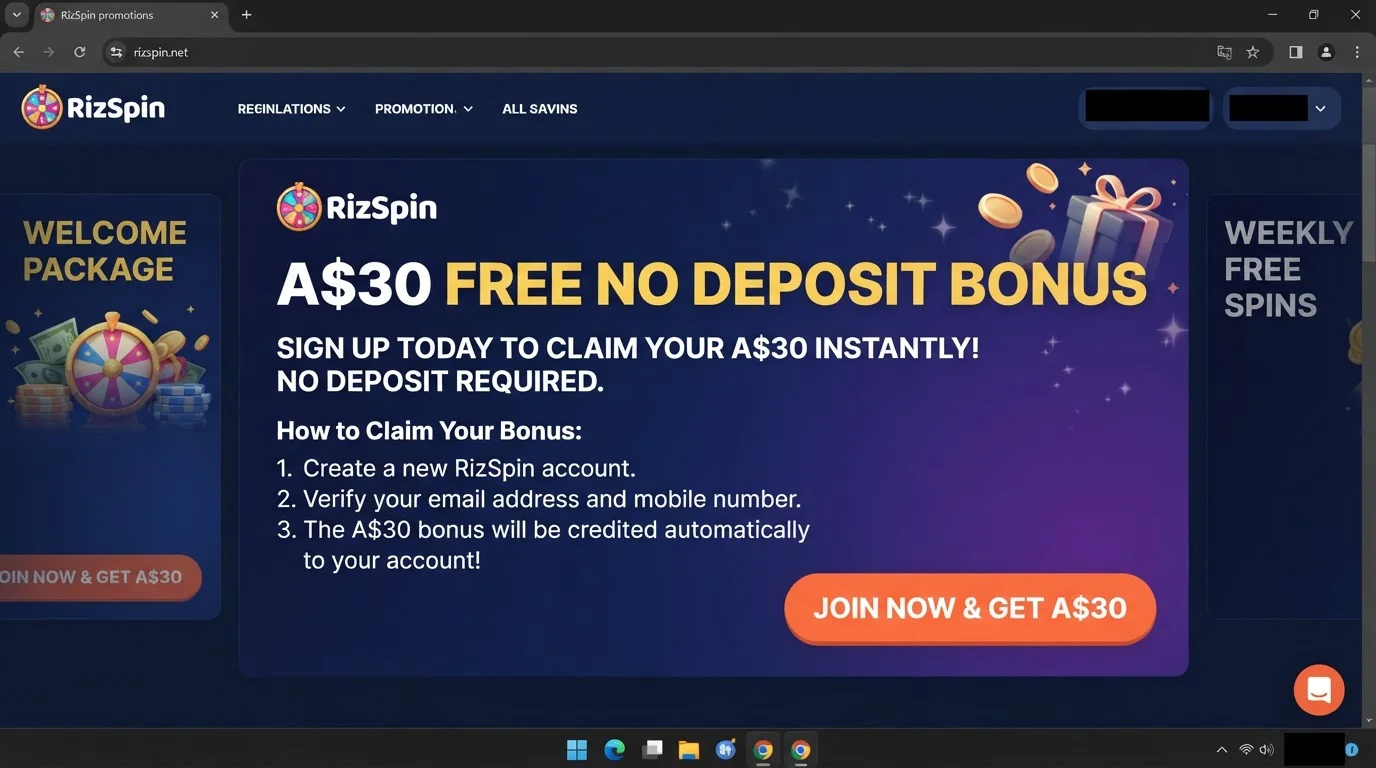
This distinction matters because bonus language can make an offer appear separate from the gambling activity it is designed to promote. Descriptions such as a welcome reward, a deposit match or a no-deposit offer remain promotional claims when they are used to attract participation in a prohibited service. Their wording does not establish that the service is permitted in Australia, nor does it create an exception to the law.
Advertising real-money interactive gambling services, including online casinos, to Australian audiences is prohibited. Accordingly, a bonus advertisement cannot be treated as acceptable merely because it focuses on a reward rather than naming the games or describing how they work. The relevant question is the activity being promoted, not only the vocabulary used in the advertisement. A disclaimer or commercial disclosure does not make prohibited casino promotion neutral.
Conflicting Withdrawal Figures
There are inconsistent reports regarding services leaving the market: one account states more than 210 illegal services withdrew after 2017, while another gives the figure as more than 190.
The Australian Communications and Media Authority (ACMA) oversees compliance with federal interactive gambling rules and may investigate operators that provide or advertise prohibited services. It can also ask internet service providers to restrict access to websites offering prohibited services or advertising them in Australia. Since enforcement began, ACMA action has led to more than 1,455 illegal gambling and affiliate websites being blocked. That record concerns enforcement activity; it does not establish the status or terms of any particular promotional claim.
Figures about services leaving the Australian market require care. One account states that more than 210 illegal services withdrew after ACMA began enforcing the rules in 2017, while another gives the figure as more than 190. The two totals conflict and should not be combined or presented as though they were the same measure. Neither figure substantiates a bonus, the identity of a service behind an offer, or the conditions attached to an advertised reward.
Promotional wording alone cannot establish the terms that would govern a claim. A headline may foreground a benefit while leaving material conditions in smaller text or elsewhere, but without an identified offer and its terms, no conclusion can be drawn about eligibility, qualifying activity, withdrawal requirements, expiry, or other restrictions. Those details should not be inferred from common industry practice. Nor can a stated reward be treated as money available to withdraw unless the terms establish that outcome.
These evidentiary limits are separate from the legal prohibition. Even complete and clearly presented conditions would not make the provision of a prohibited real-money casino service lawful in Australia. Conversely, a lack of detail in a promotion does not by itself establish what the operator intended or how a particular customer would be treated. The legal status of the service and the accuracy of a promotional claim are distinct questions, although both can matter when assessing an advertisement.

The distinction also prevents a misleading use of “bonus” as a substitute for scrutiny. Promotional language may describe a reward, but it cannot verify that a service is authorised, that an offer is available to people in Australia, or that its conditions will be honoured. In this market, advertising an offshore online casino is not made permissible by describing its promotion as an incentive, loyalty benefit or introductory offer. ACMA’s enforcement powers apply to prohibited services and their advertising, rather than to the promotional label chosen.
A careful account of casino bonuses in Australia therefore has to separate three matters: what an advertisement claims, what conditions its terms actually set out, and whether the underlying service may lawfully be offered to people in the country. The first two require a specific promotion and reliable documentation; the third is governed by federal law. Without those distinctions, a promotional headline can be mistaken for proof of availability or legitimacy. No promotional description should be read as changing the legal position on real-money online casino services in Australia.
Casino Payments and Crypto: Information Gaps
Payment claims need to be separated from the legal status of the service they relate to. In Australia, the Interactive Gambling Act 2001 prohibits operators from providing real-money online casino games to people physically located in the country. That prohibition covers pokies and other casino-style services, including poker and table games. A payment option, whatever form it takes, does not change whether the underlying service is lawful.
Payment Methods
Technical capability to process funds does not establish that a wagering service is lawfully operating.
Cryptocurrency
Acceptance of digital assets does not prove legal permission or specify how transactions are handled.
Payment Providers
General payment products do not imply that the provider has authorised a specific gambling transaction.
This distinction matters because a list of payment methods can describe a technical capability without establishing that a wagering service may lawfully offer the activity being funded. Nor does the presence of a familiar payment brand establish that it has approved a particular transaction or endorses the service. Payment terminology should therefore not be treated as evidence of regulatory approval.
The same principle applies to cryptocurrency. A claim that a service accepts digital assets would, by itself, say nothing about whether the service may provide prohibited gambling to people in Australia. It also would not establish how a transaction is handled, what exchange rate applies, whether a balance can be returned, or what conditions govern a transfer. Those details depend on the particular service and its terms; they cannot be inferred from the word “crypto”.
Deposit and withdrawal claims are separate from the question of legality. Statements about processing speed, charges, account limits, supported currencies or reversals are specific operational claims. They require reliable, current evidence about the relevant service and transaction conditions. A payment-method logo or a general description of a transfer route cannot substantiate them. Without evidence for a particular claim, no precise conclusion about timing, cost or availability follows.
It is also important to distinguish a payment provider from the operator receiving funds. A provider may offer a general payment product, but that does not show that it permits its use for a particular gambling transaction. Conversely, a service’s statement that a method is available does not establish that the provider has authorised the transaction. The two sides of a payment arrangement should not be collapsed into one claim.

Australian enforcement provides context for why payment descriptions do not stand alone. The Australian Communications and Media Authority (ACMA) enforces the Interactive Gambling Act 2001 and may ask internet service providers to block websites that provide prohibited interactive gambling services or advertise them in Australia. ACMA’s enforcement actions have led to more than 1,455 illegal gambling and affiliate websites being blocked since November 2019. A listed payment route does not remove that enforcement context or establish that a service is permitted to operate.
Reported figures on services withdrawing from the Australian market are not consistent: one account puts the number above 210, while another gives a figure above 190 since enforcement began in 2017. The disagreement should remain explicit; neither number can be substituted for the other as though the reports aligned. In any case, a withdrawal figure does not establish which payment methods a service offered, or whether a particular transaction was completed.
Payment descriptions can also blur distinct stages. Funding an account, holding a balance, converting between currencies and requesting a withdrawal are not interchangeable events. A claim about one stage does not prove the conditions for another. The same caution applies to digital assets: mentioning a blockchain transfer does not specify the asset, network, conversion process or terms for a return transfer. None of these operational details can be assumed from a broad payment label.
The soundest reading of payment language is therefore narrow. It may indicate what a service says it can process, but it does not prove legal permission, provider approval, transaction reliability or a particular financial outcome. For real-money online casino services offered to people in Australia, the governing issue remains the statutory prohibition, not whether the proposed funding method is conventional or digital.
Mobile Access to Casino Services
A phone or tablet does not change the legal status of a wagering service. Under the Interactive Gambling Act 2001, operators may not provide real-money online casino games, including pokies, to people physically located in Australia. The restriction applies to the service, rather than to the type of device used to reach it. An app, a mobile browser and a desktop browser therefore do not create different legal categories.
This distinction matters because a service’s appearance on a mobile screen is not evidence that it may lawfully provide real-money casino gambling in Australia. A page loading successfully, or an app being visible in a store, would not by itself establish that the operator is permitted to offer the service to people in the country. Nor does a claim of overseas licensing alter the Australian prohibition. The relevant question is whether the service is being provided to customers located in Australia, not whether its interface is designed for mobile use.
Enforcement can affect access at the network level. The Australian Communications and Media Authority (ACMA) is responsible for enforcing the federal interactive gambling framework and may ask Australian internet service providers to block websites that provide prohibited services or advertise them locally. ACMA reports having blocked more than 1,455 illegal gambling and affiliate websites since November 2019. A block may affect whether a particular site can be reached through an internet connection; it does not make the underlying service lawful or establish that another route to it is authorised.

Mobile access can also be described too broadly. A website that adapts to a small screen, an app, account access, or particular functions such as notifications are distinct technical features. None can be assumed for a given wagering service without reliable service-specific evidence. The same caution applies to claims about compatibility with a device or operating system, installation, performance, or continuity between devices. Such statements are factual claims about a product, not consequences of the general rules governing online gambling.
The legal framework also covers advertising. ACMA can investigate and take enforcement action when an operator provides or advertises prohibited online gambling services. A promotion encountered on a phone does not become permissible because it appears within an app, through a browser, or in another mobile format. The medium of delivery does not remove the restrictions on advertising prohibited services to an Australian audience.
The enforcement figures describe different outcomes and should not be combined. ACMA has reported that more than 210 illegal services withdrew from the Australian market after enforcement began in 2017, while another version of the reported figure says more than 190. Withdrawal from the market is also not the same measure as a website being blocked: one concerns a service’s reported departure, while the other concerns an access restriction.
These distinctions help separate mobile convenience claims from legal and operational facts. A mobile interface may be presented as simple or accessible, but those descriptions do not establish lawful availability in Australia. Similarly, a site’s apparent accessibility at one moment cannot be treated as proof of continuing access, a local authorisation, or regulatory approval. Network blocks and enforcement actions can change access, while the legal status of prohibited real-money casino services remains tied to the law rather than to the device.
The federal law sets substantial penalties for operators that breach it: the maximum daily penalty is $360,000 for an individual and $1.8 million for a body corporate. These penalties concern the parties violating the Act and should not be confused with the position of a player. The stated framework does not impose player liability merely for using an offshore wagering service. That distinction does not amount to approval or a recommendation; it simply separates the operator-focused prohibition from the consequences attributed to users.
Accordingly, mobile access is not a reliable test of whether a real-money casino service is lawful, locally authorised or endorsed by a regulator. The device describes how a service is viewed, not whether it may be offered in Australia.
Created by the ”Rizspin Casino” editorial team.