
Separate Litecoin claims from what the evidence can show
Crypto-payment claims, Australian availability and legal status each require separate, operator-specific evidence.

Table of Contents
- What the Available Evidence Establishes About Litecoin Casino Access
- Evaluating Claims About Litecoin Casino Sites
- Why a Verified Comparison of Litecoin Casinos Is Not Possible
- Bonus and Slot Claims: What Cannot Be Confirmed
- Casino Games and Litecoin Payments: Separate Questions
- What Can Be Said About Playing With Litecoin
- Australian Legal Context for Offshore Online Casinos
- Deposits, Withdrawals, and the Limits of General Crypto Evidence
- Live Dealer Claims and the Evidence Gap
- Litecoin Slot Claims Cannot Be Verified Here
What the Available Evidence Establishes About Litecoin Casino Access
The phrase “Litecoin casino” combines two separate ideas: an online gambling service and a cryptocurrency. That combination may describe what someone hopes to find, but the phrase itself does not establish that a casino accepts Litecoin, that its services are available in Australia, or that the arrangement is lawful. Those are distinct questions, and each requires evidence about the relevant operator, payment conditions and legal setting.
In particular, evidence that Bitcoin or Ethereum can provide rapid deposits or withdrawals with limited or no fees cannot be transferred to Litecoin. Similarity between digital assets is not proof that a payment network, cashier or operator treats them alike. A claim about a “Litecoin online casino” therefore requires confirmation of Litecoin itself, rather than an inference based on crypto payments in general.
There is also a difference between a service being described as online and being accessible to people in a particular country. A platform’s website, a payment option, and permission to provide gambling services to Australian residents are not interchangeable facts. A page that mentions Litecoin may describe a general product, an overseas service, or a payment method without establishing that Australian users can use it. The label “Litecoin casino in Australia” cannot settle these questions on its own.
Top operators
If you are looking for a casino that accepts Litecoin in Australia, confirm that Litecoin deposits and withdrawals are currently available to Australian players before signing up. The details below offer a brief reference point on the listed operators, but do not specify their Litecoin support.
-
DragonSlots Casino
- License
- Curacao Gaming Authority (Jumpman Gaming Ltd)
DragonSlots Casino is listed with a Curacao Gaming Authority licence held by Jumpman Gaming Ltd.
-
SpinsUp
- License
- Curacao Gaming Control Board OGL/2023/174/0082 (Dama N.V.)
SpinsUp is listed with Curacao Gaming Control Board licence OGL/2023/174/0082, held by Dama N.V.
-
JeetCity Casino
- License
- Curacao eGaming (Dama N.V.)
JeetCity Casino is listed with a Curacao eGaming licence held by Dama N.V.
-
Roby Casino
- License
- Curacao eGaming (Roby Games Ltd)
Roby Casino is listed with a Curacao eGaming licence held by Roby Games Ltd.
-
Neospin
- License
- Curacao Gaming Control Board OGL/2023/176/0095 (Hollycorn N.V.)
Neospin is listed with Curacao Gaming Control Board licence OGL/2023/176/0095, held by Hollycorn N.V.
-
Rollero Casino
- License
- Curacao Gaming Control Board OGL/2023/176/0095 (Hollycorn N.V.)
Rollero Casino is listed with Curacao Gaming Control Board licence OGL/2023/176/0095, held by Hollycorn N.V.
-
Kingmaker
- Payout speed
- crypto ~90 minutes, fiat 1-5 days
- Min. deposit
- A$30
Kingmaker lists crypto payouts at around 90 minutes and fiat payouts at 1–5 days. Its minimum deposit is A$30.
-
SkyCrown
- License
- Tobique Gaming Commission
- Payout speed
- crypto ~10-15 minutes, fiat 1-5 days
- Min. deposit
- A$30
SkyCrown is listed with a Tobique Gaming Commission licence. Its stated crypto payout time is around 10–15 minutes, its fiat payout time is 1–5 days, and its minimum deposit is A$30.
-
Ricky Casino
- Payout speed
- crypto under 1 hour, PayID 1-3 business days
- Min. deposit
- A$20 (A$30 to qualify for the bonus)
Ricky Casino lists crypto payouts in under an hour and PayID payouts in 1–3 business days. Its minimum deposit is A$20, or A$30 to qualify for the bonus.
-
Thor Casino
- License
- Curacao – Antillephone N.V. (Versus Odds B.V.)
- Min. deposit
- EUR 20
Thor Casino is listed with a Curacao licence held by Antillephone N.V. (Versus Odds B.V.). Its minimum deposit is EUR 20.
Australia’s legal setting further limits what can be inferred from promotional descriptions. The Interactive Gambling Act 2001 prohibits operators from offering real-money online casino games to people physically located in Australia. The Australian Communications and Media Authority is responsible for enforcing that law. This concerns the provision of casino services, not the technical properties of Litecoin. A cryptocurrency’s availability or transaction capability does not alter the legal status of the gambling service connected to it.
The distinction matters because a payment method cannot be treated as evidence of lawful access. Even if a casino advertises a digital-asset option, that statement would not show that its real-money games may be offered to Australian residents. Nor does the existence of a website establish that its services are available in practice or permitted under Australian law. The legal position applies to the operator’s provision of the service; it is not changed by whether the cashier lists a conventional payment method or a cryptocurrency.
Search terms such as “casino online Litecoin” or “Litecoin mobile casino” can point toward different features, but they do not prove that those features are connected. A mobile-compatible site is not necessarily a casino that accepts Litecoin. A Litecoin payment option, if advertised, would not by itself establish mobile access, the availability of particular games, or permission to offer those games in Australia. Each claim has its own evidential burden.


The same caution applies to broad descriptions of crypto transactions. General statements about speed and fees may be relevant to Bitcoin or Ethereum, but they cannot establish Litecoin deposit or withdrawal times, charges, processing rules or availability. Those conditions depend on the specific payment arrangement and operator. Without Litecoin-specific evidence, a confident statement about how a Litecoin casino would handle funds would go beyond what can be established.
These distinctions also prevent a misleading reading of names and labels. “Litecoin online pokies” may sound like a single product category, but it joins a payment concept to a form of online gambling. Neither the wording nor its repetition in a site description provides proof of a particular payment integration, a specific game offering or lawful availability to people in Australia. The service and payment claims need to be assessed separately, while the legal restriction remains relevant to the operator’s offer.
Those points do not demonstrate that Litecoin is accepted by an online casino for Australian customers. They also do not establish a Litecoin-specific mobile service, online pokies, or a live casino arrangement. Such claims require evidence tied to Litecoin and to the particular service, and they cannot be inferred from general statements about crypto or from the wording used to describe a site.
Evaluating Claims About Litecoin Casino Sites
Calling a Litecoin casino “best” is a judgment about a particular service, not a property that can be inferred from the payment method alone. The label might imply dependable access, clear terms, fair treatment or suitability for a particular purpose. Each of those implications requires evidence about the operator and its practices. A shared cryptocurrency name does not establish any of them.
For Australian residents, suitability also cannot be separated from the legal setting. The Interactive Gambling Act 2001 prohibits operators from providing real-money online casino games to people in Australia, and the Australian Communications and Media Authority enforces that law. This places a fundamental limit on describing offshore casino services as suitable choices for the Australian market. Australian consumer law does not protect players using offshore casinos, which is material when assessing any claim of quality or reliability.
Claims about a casino accepting Litecoin are narrower than claims that it is a good casino. Acceptance would need to be established for the particular operator and the relevant service. Even if acceptance were confirmed, it would not establish that the operator is safe, that its terms are clear, or that the experience is suitable for Australian residents. Payment availability alone cannot support a broader endorsement.
The same distinction applies to descriptions such as “online casino with Litecoin” or “Litecoin casino online.” These phrases identify an asserted connection between a casino and a payment method; they do not explain the conditions attached to that connection or the status of the service in Australia. Without operator-specific evidence, the wording cannot be treated as confirmation that a particular site accepts Litecoin. Nor would confirmation of payment acceptance, by itself, establish quality.


“Best online pokies” or “best live casino” adds further judgments. Those descriptions concern games or services as well as an operator’s overall standing. They cannot be derived from a claim about Litecoin. In Australia, the legal restriction on operators offering real-money online casino games also matters to these descriptions: presenting a service as a suitable casino option would overlook the distinction between an operator’s marketing claim and the applicable law.
A careful assessment therefore separates several questions that promotional language can collapse into one. Is the payment method supported by the named service? What terms govern its use? What evidence supports claims about the operator’s conduct? And is the service lawful for an operator to provide to people in Australia? An affirmative answer to one question would not settle the others. A payment logo or a short claim of acceptance cannot carry the weight of a full quality assessment.
The phrase “best Litecoin casino site” is especially strong because it implies comparison and a defensible standard. Without a stated basis for judging quality, the word “best” expresses a conclusion rather than an observable feature. A site might be described as accepting Litecoin only where that specific capability has been established; calling it suitable or superior requires separate support. The label itself supplies none.
This also limits what can responsibly be said about Litecoin casino sites as a category. A payment method does not certify an operator, remove legal restrictions, or create consumer protections. General familiarity with digital payments cannot establish the conduct or suitability of an individual casino service. Likewise, an operator’s claim about its own offering is not, by itself, independent evidence of quality.
For Australian readers, the distinction between description and recommendation is consequential. A site might be described in terms of a claimed payment option, but that wording should not become an endorsement of offshore gambling. Operators are prohibited from providing real-money online casino games to people located in Australia, and players using offshore casinos do not receive Australian consumer-law protection. Those conditions bear directly on any claim that a Litecoin casino is a good or suitable choice.
Accordingly, labels such as “best online casino with Litecoin” should be treated as conclusions that require substantiation, not as facts established by the currency named in the label. A defensible evaluation would need evidence about the specific service and a lawful basis for presenting it as suitable for the Australian market. Without both, the claim remains an assertion rather than a reliable assessment.
Why a Verified Comparison of Litecoin Casinos Is Not Possible
A comparison of casinos associated with Litecoin would require more than a collection of claims that individual sites accept the currency. It would need a defined set of operators and consistent, current information about the same features at each one. Without that foundation, labels such as “best” or “leading” cannot be treated as findings. They imply that the options were assessed against common criteria, rather than selected through an unexplained editorial judgment.
The first difficulty is establishing which services belong in the comparison. A site’s general availability to Australian users does not establish that it accepts Litecoin, and a reference to cryptocurrency does not establish support for this particular currency. The distinction matters: grouping services under a Litecoin heading without confirming the payment method would make the comparison unreliable from the outset.
Even where a payment claim is made, a fair comparison would require equivalent details. A statement that a deposit is possible does not, by itself, establish how the cashier handles the transaction, whether the method is available to Australian customers, or whether the same conditions apply to withdrawals. Those are separate attributes, not interchangeable signs of overall suitability. A table that compresses them into a simple rating would conceal distinctions that could affect the result.
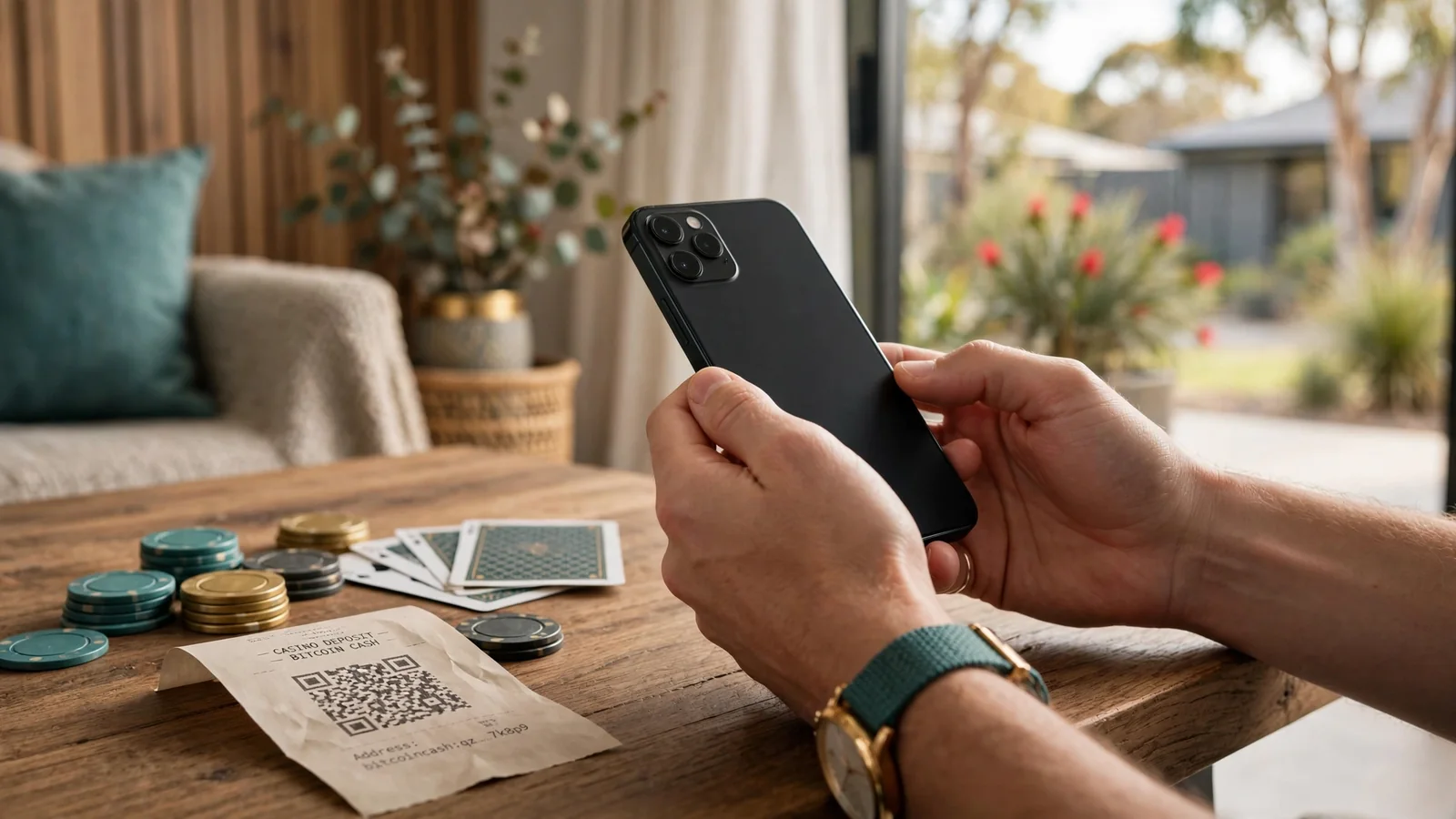

The criteria used to judge “best” also need to be explicit. A ranking might depend on payment access, account conditions, service availability, or some other defined measure. No single criterion can stand in for all the others, and a ranking based on an undisclosed weighting cannot be independently interpreted. The same concern applies to a list of sites: inclusion alone can be mistaken for endorsement, although a list does not prove that its entries share verified features or meet a common standard.
Comparisons also depend on time. Payment arrangements and service terms can change, so information that once supported a comparison may not describe present conditions. A claim about a recent change is not enough to establish that all entries were checked at the same point or under equivalent conditions. A comparison without a clear basis for currency may therefore look more precise than it is.
The Australian legal setting is another necessary part of any assessment. Under the Interactive Gambling Act 2001, operators may not provide real-money online casino games to people in Australia. The Australian Communications and Media Authority enforces the Act. This market-wide restriction does not establish which operators support Litecoin; nor would a payment feature, by itself, settle whether a service is lawful to provide to Australians. Australian consumer law does not protect players who use offshore casinos, a material limitation when assessing claims about their suitability.
For these reasons, a defensible comparison cannot be built merely by arranging names into a ranked list or assigning broad quality labels. The method would need to establish the relevant services, verify comparable attributes, and account for the Australian legal context without suggesting that payment support amounts to legal approval. Until those elements can be assessed on a consistent basis, a claim that one Litecoin casino is better than another would exceed what the comparison can show. The same restraint applies to a purportedly comprehensive list: completeness cannot be inferred from presentation alone.


Bonus and Slot Claims: What Cannot Be Confirmed
A claim that a Litecoin casino offers a welcome reward, a deposit match or a promotion requiring no deposit is meaningful only when it is tied to clear, current terms. Without those terms, the headline alone cannot establish who qualifies, how a reward is credited, whether Litecoin is an eligible payment method or what conditions apply before any balance can be withdrawn. No particular Litecoin bonus can therefore be treated as a confirmed offer.
The same distinction applies to claims about a “best” bonus. That description implies a comparison based on defined criteria, such as eligibility, payment conditions and restrictions on withdrawing winnings. Without substantiated terms for the offers being compared, a ranking would create a level of certainty that the underlying details do not support. A label such as “best” does not, by itself, establish value or suitability.
A Litecoin-specific offer also raises a separate question from whether a casino advertises a general promotion. An operator might describe an offer as available to new customers or attach it to a deposit, but that wording would not establish that Litecoin deposits qualify. The currency, payment route, eligible games and any exclusions would need to be stated in the applicable conditions. It would be unsound to infer eligibility from the mere appearance of Litecoin in a casino’s payment information.
The phrase “no deposit” should not be read as meaning that a reward has no conditions. The wording alone does not explain who can receive it, whether identity checks apply, or whether restrictions govern its use or withdrawal. Similarly, a welcome offer does not establish that every new customer receives it or that it applies to every payment method. Those details depend on the actual terms, not on the promotional label.
Do
- Tie reward claims to clear, current terms
- Verify if Litecoin is an eligible payment method
Don't
- Treat a headline as a confirmed offer
- Infer eligibility from the mere appearance of Litecoin in payment info
Claims concerning free Litecoin play require the same care. The word “free” does not establish whether a reward is cashable, whether it is denominated in Litecoin, or whether it is limited to a particular product or account status. Without specific terms, such claims cannot establish a usable benefit. The same caution applies to offers described as connected with online slots or video slots: promotional language does not prove that a Litecoin payment method is accepted for the relevant activity, nor does it establish the terms of an offer.
This is not merely a question of payment mechanics. An advertised bonus, an eligible payment method and access to a particular form of gambling are distinct claims. One cannot be used as proof of another. Nor does a promotional statement establish that a service is lawful to provide in Australia.
The legal setting is material. Under the Interactive Gambling Act 2001, operators are prohibited from providing real-money online casino games to people in Australia. Australian consumer law does not protect players who use offshore casinos. Promotional claims should not be understood as an assurance that an offer is lawful, available to Australian residents or protected under Australian consumer rules. The Australian Communications and Media Authority enforces the Act.
Accordingly, phrases promising a Litecoin welcome bonus, a deposit incentive or a reward without an initial deposit should be treated as unverified unless precise, applicable terms support them. No particular bonus, slot-related promotion or Litecoin-specific offer can be established here. That does not establish that such promotions exist or that they do not; it marks the limit of what a promotional label can demonstrate.

Casino Games and Litecoin Payments: Separate Questions
A casino game and the method used to fund an account are different parts of an online service. A game describes what is offered for play; a payment method describes how money is transferred. Evidence about one does not establish the other. A site’s references to Litecoin, for instance, would not by themselves show which games it offers, while a game listing would not show that Litecoin can be used to pay.
The distinction matters because terms such as “Litecoin casino game” can blur two separate claims. One claim concerns whether an operator provides a particular game to Australian residents. The other concerns whether its cashier supports Litecoin for deposits or withdrawals. Each requires its own evidence. Neither follows from the general fact that some cryptocurrencies can be used for online transactions.
The same separation applies to descriptions of play involving Litecoin. A payment option, if available, would not establish that a game is designed for Litecoin, operates on its network, or has features tied to the currency. Conversely, a game’s availability would not demonstrate that Litecoin is an accepted payment method. Labels that combine the currency and game therefore need careful interpretation rather than being treated as proof of a linked product.
Nor does a reference to Litecoin establish anonymity. Payment arrangements and identity checks are separate matters. Online casinos typically require customers to complete a Know Your Customer assessment before financial transactions, so the presence of a cryptocurrency payment method would not, on its own, support a claim that account use is anonymous.
Anonymity and KYC
Online casinos typically require customers to complete a Know Your Customer assessment before financial transactions, meaning a cryptocurrency payment method does not automatically support a claim that account use is anonymous.
These distinctions do not establish that any particular game or payment arrangement is available in Australia. The Interactive Gambling Act 2001 prohibits operators from offering real-money online casino games to people in Australia. Australian consumer law does not protect players who use offshore casinos. Those conditions are relevant to claims about play, regardless of the currency mentioned.
Accordingly, “casino games” and “Litecoin payments” should not be treated as interchangeable descriptions. A claim about a game needs evidence about the game and its availability; a claim about a Litecoin payment needs evidence about the cashier and the transaction conditions. Without both, a combined description cannot substantiate a specific connection between the currency and casino play.
What Can Be Said About Playing With Litecoin
The idea of playing with Litecoin combines a payment method with access to a gambling service. Holding Litecoin, or being able to transfer it between wallets, does not by itself establish that a casino will accept it or that a payment could be used to participate in games.
A claim that someone can play at a Litecoin casino therefore needs to be read as more than a statement about cryptocurrency in general. It implies that a service is available to the person, that it accepts Litecoin for the relevant transaction, and that the transaction can be connected to play.
The same distinction applies to searches about playing casino games using Litecoin. General information about cryptocurrencies does not demonstrate that Litecoin is accepted by a casino, nor does it establish which games, if any, could be accessed after a payment. It would be inaccurate to infer availability from the fact that other cryptocurrencies can be used for transactions in some settings. Payment arrangements are not interchangeable simply because the assets are all digital currencies.

Account checks are another separate consideration. Online gambling services commonly require identity verification before processing financial activity. A label alone cannot confirm that an account can be opened or used without verification.
There is also an important Australian consumer-protection limitation: Australian consumer law does not protect people using offshore casinos.
Accordingly, “playing with Litecoin” should not be treated as a confirmed combination of a particular casino, payment route and game. The distinction is between the proposed use of a cryptocurrency and evidence that the whole payment-and-play process is actually supported.
Australian Legal Context for Offshore Online Casinos
Australia’s legal framework places the principal prohibition on operators, not on individual players. Under the Interactive Gambling Act 2001, it is illegal for an operator to provide real-money online casino games to people physically located in Australia. The prohibition covers casino-style services such as poker and table games as well as pokies. The law therefore concerns the provision of the service to people in Australia, including when the operator is based offshore.
The Act does not explicitly make it a criminal offence for an individual to use an offshore online casino. That distinction should not be confused with approval or protection: the absence of an explicit player offence does not make an operator’s service lawful in Australia. Nor does it establish that a particular website can lawfully serve Australian residents. The legal assessment turns on the service being provided and the location of its customers, rather than on whether its cashier lists a particular payment method.
The Australian Communications and Media Authority (ACMA) is responsible for enforcing the Interactive Gambling Act. Its role is to enforce the statutory rules governing prohibited interactive gambling services. The law’s focus on operators and the regulator’s enforcement role do not amount to a local licensing route for real-money online casino services offered to Australians.
A further distinction concerns consumer protection. Australian consumer law does not protect players who use offshore casinos. This matters independently of whether a player is personally subject to a penalty under the Interactive Gambling Act: the absence of an explicit criminal prohibition on the player does not supply the consumer protections that would apply to a lawful domestic service. The status of the operator and the protections available to a customer are separate questions.
Payment in Litecoin, or in any other form, does not change the statutory character of an online casino service. A digital currency option cannot make the provision of prohibited real-money casino games lawful, and payment availability is not evidence of regulatory approval. Accordingly, interest in an offshore casino that appears to accept Litecoin should be understood against the same market-wide legal rule: operators may not provide real-money online casino games to people located in Australia, while ACMA is the body responsible for enforcement.
Deposits, Withdrawals, and the Limits of General Crypto Evidence
Transaction claims need to be tied to a particular cryptocurrency and payment route. General information about cryptocurrency handling cannot establish how a Litecoin transfer would be processed by a casino, or whether a given cashier would accept it. Deposit speed, withdrawal timing and fees are separate conditions; evidence about one does not settle the others.
Bitcoin and Ethereum are described as offering instant deposits and withdrawals with limited or no fees. That information concerns those currencies, not Litecoin. It therefore cannot substantiate claims that a Litecoin deposit would arrive instantly, that a Litecoin withdrawal would be fast, or that either transaction would carry no fee. Similarities among cryptocurrencies are not enough to infer identical processing arrangements.
A payment may also involve more than the transfer between wallets. The receiving service’s procedures and the terms attached to an account can affect when funds are credited or released. Without Litecoin-specific conditions, there is no sound basis for assigning a processing time or fee to either direction of a transaction. The word “instant” should not be treated as a demonstrated outcome merely because it appears in a description of other cryptocurrencies.

Nor does a general statement about crypto deposits establish that a cashier offers Litecoin, or that a withdrawal can be made in the same currency used for a deposit. Deposit and withdrawal availability are distinct questions. A claim about a Litecoin casino deposit, a no-deposit offer, or a withdrawal method would each require direct, current evidence about the relevant terms. None follows from broad information about Bitcoin or Ethereum.
These distinctions matter particularly when language such as “fast withdrawal” or “no fees” is used without defining the currency, transaction stage or applicable conditions. Such wording may sound precise while leaving the central payment details unresolved. No Litecoin-specific processing speed, fee, deposit option or withdrawal route can be stated on the basis of general crypto information alone.
Finally, Australian consumer law does not protect people who use offshore casinos. That context makes unverified assurances about payment handling especially unsuitable as a basis for financial decisions. General cryptocurrency characteristics should not be presented as confirmation of Litecoin transaction terms at an online casino.
Live Dealer Claims and the Evidence Gap
A claim that a live-dealer casino accepts Litecoin combines two separate propositions: that a service offers live-dealer play and that it supports Litecoin payments. Establishing one does not establish the other.
This distinction matters because broad references to crypto casinos do not establish that Litecoin is accepted, and general references to live-dealer services do not establish a connection to that payment method. A description of a cashier, a cryptocurrency payment option or a live-dealer catalogue cannot, by itself, confirm that the features operate together for Australian users. Nor does a label such as “live dealer” establish the terms, availability or legal status of a service in Australia.
Claims using phrases such as “Litecoin live dealer casino” should therefore be treated as unsubstantiated unless supported by current, service-specific information. General statements about cryptocurrency or live casino products are not enough.

The Australian legal setting also limits how such claims should be interpreted. The Interactive Gambling Act 2001 prohibits operators from providing real-money online casino games to people in Australia, and the Australian Communications and Media Authority enforces the Act. Australian consumer law does not protect people who use offshore casinos. These points do not establish whether any particular site accepts Litecoin; they do mean that a payment claim should not be taken as evidence that a service is lawful to provide in Australia or carries local consumer protections.
Litecoin Slot Claims Cannot Be Verified Here
A claim that an online casino offers games playable with Litecoin combines two separate propositions: that the casino makes a particular game available and that it supports Litecoin for relevant transactions. Neither follows from the other. A game catalogue alone would not establish a payment option, and a payment option alone would not establish which games can be accessed.
This distinction matters when interpreting descriptions of Litecoin slots or references to slots associated with Litecoin. Such wording may suggest that a game is built around the currency, that Litecoin is accepted at a casino offering games, or simply that the terms appear together in a description. Those meanings are not interchangeable. Without details tied to a specific service and its current terms, the wording does not establish that any game can be accessed using Litecoin.

Nor does a label such as “trusted” or “licensed” resolve the question. Those terms require evidence about the operator and the relevant legal framework; they cannot be inferred from a payment claim or a reference to games. In Australia, the Interactive Gambling Act 2001 prohibits operators from providing real-money online casino games to people located in the country. The Australian Communications and Media Authority enforces that law. A claim about Litecoin cannot alter that legal position.
Accordingly, descriptions of Litecoin and casino games should not be read as confirmation of a particular game’s availability, compatibility, or lawful provision to Australians. The distinction is especially important where a broad promotional phrase is used without identifying the service, the terms governing access, or the relationship between payment and game availability. None of those details can be supplied by the phrase alone. A precise claim would need to specify what is offered and under which conditions; absent that, the association remains unsubstantiated rather than evidence of a usable game.
What are the deposit and withdrawal limits at the best Amex casinos?
Amex deposit and withdrawal limits are set by each casino and can vary. Check the casino’s cashier or payment terms for its limits; Amex limits are usually higher than those for Visa or Mastercard.
Which online casinos accept American Express for deposits?
Jackpot City Casino, Spin Palace, Ruby Fortune, Ignition Casino, Joe Fortune and PlayAmo are listed as accepting Amex deposits for Australian players.
Are casino Amex payments instant?
Amex deposits are processed instantly. Withdrawals can take up to five days to clear.
Does American Express work for online casinos?
Yes, some Australian online casinos accept Amex deposits. Acceptance is not universal, and Australian banks may block gambling transactions on Amex cards.
Are there fees for using Amex at online casinos?
Amex deposits are typically free, but a casino may charge a 1.5% surcharge, and currency conversion can incur a 3% fee. Withdrawal fees may also apply.
How long do Amex casino deposits take to process?
Amex casino deposits are processed instantly.
Prepared by the Rizspin Casino editorial staff.