
Understand the full route from AUD to casino withdrawal
See how exchange transfers, Solana fees, casino terms and wagering rules affect the practical value and movement of SOL.

Table of Contents
- How SOL Moves Between Australian Exchanges and Casino Wallets
- What a Solana Casino Comparison Can—and Cannot—Verify
- The Australian Legal Position on Offshore Solana Casinos
- Solana Slots and Bonus Wagering Rules
- NFT Claims and Casinos That Accept Solana
- Crypto Gambling and the Tax Treatment of SOL
- Dice Play and Solana Transaction Mechanics
- Casino Games, Bonus Terms, and Effective Value
- SOL Deposits, Minimums, and Price Exposure
- Solana Fees and Casino Transactions
How SOL Moves Between Australian Exchanges and Casino Wallets
Moving funds from an Australian bank account to a casino wallet generally involves two separate transfers: Australian dollars go to a crypto exchange, then SOL goes from that exchange to a wallet controlled by the offshore platform. The reverse route begins with a casino withdrawal in SOL, continues through receipt in an exchange account, and ends with conversion to AUD and a bank withdrawal. Each step has its own checks and processing time; a quick blockchain confirmation does not mean the full cash-out is complete.
Most Solana casino services do not accept AUD directly by bank transfer or card. The usual funding route is to buy SOL on an Australian exchange and send it to the casino’s deposit address. Swyftx, CoinSpot and Coinbase AU support AUD deposits through PayID or bank transfer. Once AUD has arrived at an exchange, it can be used to acquire SOL, subject to that exchange’s account requirements and transaction procedures.

From AUD to a casino wallet
Exchange accounts and services that convert between SOL and AUD operate under KYC and anti-money-laundering requirements. Account holders may need to provide identity and payment information before they can deposit, trade or withdraw. These checks take place at the exchange or conversion service, not on the Solana network. A completed bank transfer therefore does not by itself mean that SOL is ready to send: the exchange must also process the funds and make the purchased asset available.
The next step is a blockchain transfer. The casino provides a wallet address, and the exchange sends SOL to it. Address accuracy matters because Solana transfers are irreversible: funds sent to the wrong address may be lost permanently. The network cannot correct a mistyped destination or retrieve funds on behalf of the sender. The address and any deposit instructions therefore need to match the asset and network selected for the transfer.
A transfer can be visible on the network before a casino credits the corresponding balance. Network confirmation establishes that the transaction has been recorded; the platform still needs to identify it and apply its own deposit procedure. The balance shown in a casino account is an internal record, not the same thing as the blockchain transaction itself. This distinction is relevant whenever a payment appears complete in one place but not another.


Why withdrawal times differ
The withdrawal route runs in the opposite direction, but it is not simply a mirror of the deposit. A casino first has to approve and release a withdrawal. Only after it broadcasts a transaction does Solana’s network process that transfer. Network speed cannot establish how long an operator takes to review a request, and a casino’s processing queue cannot be measured by the blockchain confirmation time.
A specialist review has described native SOL withdrawals on competent platforms as taking 30–60 seconds to process, and has characterised a fast withdrawal as taking under 10 minutes on the network. These are reported benchmarks, not guarantees for an individual payment. The same review material notes that withdrawal speed depends on the operator’s internal handling as well as network congestion. A delay before a transaction is broadcast is different from a transaction waiting for network confirmation.
Processing can also involve platform checks. Larger withdrawals or bonus-related cash-outs may prompt KYC checks that require identity documents. This can add a separate review stage before funds are sent. Casino cash-out terms should be read before depositing, since those terms may set conditions for a withdrawal that are separate from Solana’s operation.
Funding a Casino Wallet
-
1
Exchange Deposit
Transfer AUD from a bank account to an Australian crypto exchange using methods like PayID.
-
2
Asset Acquisition
Use the deposited AUD to purchase SOL on the exchange, subject to KYC and account requirements.
-
3
Blockchain Transfer
Send the purchased SOL from the exchange to the specific deposit address provided by the casino.
-
4
Platform Credit
Wait for the transaction to be recorded on the Solana network and for the casino to credit the internal account balance.
After SOL reaches an exchange account, it must be sold or converted to AUD before the proceeds can be sent to a bank account. The exchange’s own checks and processing apply at this point too. The value received in AUD may differ from the value expected when SOL was deposited, because SOL’s price can move while funds are held or transferred. That price exposure is distinct from transaction speed.
These payment mechanics do not alter the market’s legal position. Under the Interactive Gambling Act 2001, offshore operators are prohibited from providing online casino games to Australian residents. Using SOL does not change that restriction, nor does the absence of a prosecution make offshore gambling legally safe. Offshore platforms also provide no Australian-law recourse if funds are withheld or a service closes. A VPN may lead to account seizure and loss of funds, rather than resolving these risks.
What a Solana Casino Comparison Can—and Cannot—Verify
Top operators
Choosing a Solana casino in Australia calls for checking the details that are actually available, such as licensing and payment information. This list offers a concise reference to help you assess the operators in that context.
-
DragonSlots Casino
- License
- Curacao Gaming Authority (Jumpman Gaming Ltd)
DragonSlots Casino is listed with a Curacao Gaming Authority license held by Jumpman Gaming Ltd.
-
SpinsUp
- License
- Curacao Gaming Control Board OGL/2023/174/0082 (Dama N.V.)
SpinsUp is listed with Curacao Gaming Control Board license OGL/2023/174/0082, held by Dama N.V.
-
JeetCity Casino
- License
- Curacao eGaming (Dama N.V.)
JeetCity Casino is listed with a Curacao eGaming license held by Dama N.V.
-
Roby Casino
- License
- Curacao eGaming (Roby Games Ltd)
Roby Casino is listed with a Curacao eGaming license held by Roby Games Ltd.
-
Neospin
- License
- Curacao Gaming Control Board OGL/2023/176/0095 (Hollycorn N.V.)
Neospin is listed with Curacao Gaming Control Board license OGL/2023/176/0095, held by Hollycorn N.V.
-
Rollero Casino
- License
- Curacao Gaming Control Board OGL/2023/176/0095 (Hollycorn N.V.)
Rollero Casino is listed with Curacao Gaming Control Board license OGL/2023/176/0095, held by Hollycorn N.V.
-
Kingmaker
- Payout speed
- crypto ~90 minutes, fiat 1-5 days
- Min. deposit
- A$30
Kingmaker lists crypto payouts at approximately 90 minutes and fiat payouts at 1–5 days. Its minimum deposit is A$30.
-
SkyCrown
- License
- Tobique Gaming Commission
- Payout speed
- crypto ~10-15 minutes, fiat 1-5 days
- Min. deposit
- A$30
SkyCrown is listed with a Tobique Gaming Commission license. Its stated payout times are around 10–15 minutes for crypto and 1–5 days for fiat; the minimum deposit is A$30.
-
Ricky Casino
- Payout speed
- crypto under 1 hour, PayID 1-3 business days
- Min. deposit
- A$20 (A$30 to qualify for the bonus)
Ricky Casino lists crypto payouts in under an hour and PayID payouts in 1–3 business days. The minimum deposit is A$20, or A$30 to qualify for the bonus.
-
Thor Casino
- License
- Curacao – Antillephone N.V. (Versus Odds B.V.)
- Min. deposit
- EUR 20
Thor Casino is listed with a Curacao – Antillephone N.V. license held by Versus Odds B.V. Its minimum deposit is EUR 20.
A comparison of Solana-accepting casino platforms can only be as reliable as the evidence available for each operator. Published payment instructions, withdrawal terms and account rules can be assessed against one another. They do not, by themselves, establish that a platform is dependable, that a payout will be approved, or that an Australian customer has legal protection if a dispute arises.
Licensing is not a simple comparison field
For Australian residents, a foreign licence should not be treated as permission to provide online casino games in Australia. The Interactive Gambling Act 2001 prohibits offshore operators from offering real-money casino services to people in Australia. A comparison may record what an operator says about its licensing, but that statement does not make its service lawful for Australian residents or provide local consumer protections.
A specialist review reports that a dedicated Australian licensing framework for crypto-gambling operators had not materialised by mid-2026. This is a time-sensitive description, not a guarantee that regulatory arrangements will remain unchanged. More importantly, the absence of a local licensing framework does not create a safe category of offshore casino. The fact that Australian players are not directly penalised for using such services does not make participation legally safe. No prosecution to date would not alter the law or establish protection for a player whose funds are withheld.


An evidence-based comparison should therefore distinguish an operator’s claimed jurisdiction and licence from the legal position in Australia. It should not describe an offshore platform as locally licensed, regulated for Australian customers, or safe under Australian law unless that claim can be substantiated. Licensing information can be checked as a factual disclosure; it cannot be converted into a recommendation to use the service.
Withdrawal terms require more than a speed claim
A stated withdrawal time is meaningful only when its starting point and conditions are clear. Casino terms may distinguish between the time taken to review and approve a request and the time required for a confirmed transaction to reach a wallet. These are separate stages: Solana’s network performance cannot establish how quickly an operator will authorise a withdrawal.
Reported processing periods range from 5–15 minutes for automated operators to as long as 72 hours for manual processes. Those figures describe possible internal procedures, not a guaranteed payout window for every platform or transaction. A comparison should check whether terms explain manual reviews, pending requests, account restrictions and any conditions that must be satisfied before funds can be released.
The fee position also needs careful wording. A specialist review reports that some casinos charge a withdrawal fee of 0.1%–1% of the amount. That is not evidence that every operator applies such a charge, nor does it establish the fee a particular customer would face. The relevant comparison is the operator’s own current terms, including whether a fee is disclosed and how it is calculated. A published policy can be checked; the actual handling of an individual request cannot be confirmed by reading the policy alone.
Do
- Read cash-out terms before depositing
- Provide identity documents for KYC checks
- Verify the destination wallet address
Don't
- Assume a network confirmation equals a payout
- Rely on a foreign licence for local protection
- Trust headline withdrawal speeds as guarantees
Cash-out terms need to be read before depositing, rather than after winnings have accumulated. Larger withdrawals or bonus-related cashouts may trigger KYC checks requiring identity documents. A platform’s stated process can be recorded, but it cannot guarantee that an account will not be reviewed or that a review will conclude in the customer’s favour.
What a comparison cannot establish
Public information can show whether an operator publishes withdrawal rules, identifies its licensing claims and explains account checks. It cannot independently prove that the operator follows those rules consistently, has sufficient funds available, or will remain accessible. Offshore casinos offer limited consumer protection for Australians: if an account is frozen, winnings are withheld, or a platform closes, there is no Australian legal protection against that outcome.
A comparison should also separate technical claims from independently verifiable details. A transaction appearing on Solana does not demonstrate that the casino has approved a withdrawal, and a rapid network confirmation does not resolve an operator-side delay. Conversely, a pending request should not automatically be attributed to network performance when the operator has not yet sent the transaction.
SOL transfers are irreversible. Sending funds to the wrong address can result in permanent loss, so address and network details are material to any assessment of payment procedures. SOL’s price may also change between deposit and withdrawal, reducing the Australian-dollar value of funds or winnings even when the token amount is unchanged. Neither risk is resolved by a favourable comparison score.

VPN use may lead to account seizure and loss of funds, rather than providing a reliable way around access restrictions. A comparison cannot make that practice safe or remove the operator’s ability to enforce its account rules.
A useful assessment therefore reports what can be checked and leaves the rest unresolved. It can compare published terms and identify gaps or inconsistencies, but it cannot certify a platform’s future conduct, guarantee a withdrawal, or make offshore casino play lawful in Australia.
The Australian Legal Position on Offshore Solana Casinos
The legal distinction is between holding SOL and using it to access an offshore casino. Australians may buy, hold and transfer SOL, but that does not make real-money casino services lawful when offered to people in Australia. Under the Interactive Gambling Act 2001, overseas operators are prohibited from providing online casino games to Australian residents. The rule applies to the service regardless of whether deposits and winnings are denominated in SOL rather than Australian dollars.
The Act places its direct prohibition on operators, not individual players. Australian users are therefore not directly penalised under the Act merely for using an offshore casino. That distinction should not be mistaken for legal approval or assurance that participation is safe. The underlying service remains prohibited for operators, and a lack of reported prosecutions of players would not change that position. Describing the situation as a grey area refers to the user’s exposure and the practical limits of local protection, not to permission for offshore casinos to serve the Australian market.
Enforcement and access
The Australian Communications and Media Authority (ACMA) is responsible for enforcing the Act. Its actions include blocking access to unlicensed offshore gambling websites, so a platform’s availability at one point does not establish that it is authorised to operate in Australia or will remain accessible. A specialist review reports that ACMA’s public Gambling Prohibition Register contained more than 200 unlicensed gambling sites in 2026. The register is a changing enforcement resource, not a complete or permanent catalogue of every offshore service that may be encountered.
A Solana casino can therefore be reachable, accept a transaction, or continue to operate for users elsewhere without having lawful standing to provide casino games to people in Australia. Nor does the use of blockchain payments alter the operator’s obligations under Australian law. The payment technology and the legal status of the gambling service are separate questions.
The practical consequences for users are also distinct from criminal liability. Offshore operators are outside the ordinary Australian consumer-protection framework for local gambling services. If an account is frozen, winnings are withheld, or a platform closes, Australian users have no recourse through Australian authorities to compel payment or resolve the dispute as they might expect from a locally regulated service. A platform’s own terms or a foreign licence does not create equivalent protection under Australian law.

Some users may seek to access blocked services through a virtual private network. Doing so does not make the service lawful or remove the risks attached to an offshore account. Use of a VPN may result in account seizure and loss of funds, particularly where an operator treats location masking as a breach of its terms. This is a platform-related risk, separate from the Act’s prohibition on operators providing casino services in Australia.
The broader framework remains restrictive: Australian law does not provide a local licensing route that makes real-money online casinos lawful for Australian residents. A specialist review characterises the absence of a specific framework for crypto-gambling operators as the position in mid-2026; that description does not override the Act’s existing restriction on online casino services. Consequently, the fact that SOL itself is lawful to hold or transfer cannot be used to infer that gambling with it at an offshore casino is legally safe. The operator prohibition, ACMA’s blocking powers, and the lack of local remedies for users remain relevant even where a site is accessible and a transaction succeeds.
Solana Slots and Bonus Wagering Rules
A slot’s contribution rate determines how much of a qualifying stake counts towards a bonus wagering requirement. Where slots count at 100%, each eligible stake is credited in full. A table game such as blackjack or roulette may count at only 10–20%, so the same stake can make less progress towards the requirement. The game’s contribution rate therefore matters when bonus funds are attached to slot play.
This is a term of the promotion, not a property of SOL or the Solana network. Paying with SOL does not establish how a game contributes, whether a particular slot is eligible, or when a bonus balance can be withdrawn. Those conditions depend on the operator’s published rules. A label such as “slots contribute fully” should not be read as applying to every game or promotion unless the terms say so.
Bonus balances also differ from withdrawable cash. Winnings generated from bonus funds must be wagered with real money before withdrawal. Consequently, a slot may count fully towards the stated requirement while the resulting balance remains unavailable for cash-out until the applicable conditions are met. The contribution rate answers how quickly eligible play is counted; it does not, by itself, settle whether winnings can be withdrawn.
Free-spin awards require separate attention because their winnings may be credited as bonus funds and carry their own wagering condition. A specialist review has cited a 50x requirement for such winnings, but that figure should not be treated as a universal rule for Solana slot promotions. The governing terms need to identify whether free-spin winnings are cash or bonus funds, which games qualify, and what requirement applies.
The arithmetic can also be affected by exclusions. If a game is excluded, or if only part of its stake counts, the displayed wagering total may advance more slowly than the amount played suggests. A 100% slot contribution is meaningful only for eligible bets and under the promotion’s stated rules. It does not remove other restrictions attached to a bonus.


These distinctions do not establish that any particular Solana slot machine or casino site is available to Australian residents. The Interactive Gambling Act 2001 prohibits offshore operators from providing online casino games to people in Australia. Using an offshore service is not legally safe merely because individual players are not directly penalised under the Act. The bonus terms of an offshore operator also do not create Australian consumer protections if a withdrawal is withheld.
Accordingly, a slot’s contribution rate is one narrow measure of wagering progress, not a guarantee of cash-out. The relevant terms should be read before any deposit, with particular attention to eligibility, bonus-fund treatment and withdrawal conditions.
NFT Claims and Casinos That Accept Solana
Accepting SOL for deposits does not, by itself, make an offshore casino an NFT casino. The first describes a payment option: SOL is transferred to fund an account or wager. The second may suggest a separate feature involving non-fungible tokens, such as a token-linked benefit or an NFT marketplace. Those are different claims and should not be treated as interchangeable.
A specialist review reports that some platforms accept USDC issued on Solana for deposits and play as well as SOL. That distinction concerns the asset and network used for transactions; it does not establish that a platform offers NFT functionality. USDC on Solana is a token used on that network, while an NFT is a distinct type of token. The presence of one does not demonstrate the presence of the other.
NFT vs Payment Capability
Accepting SOL or USDC on the Solana network is a payment capability and does not automatically mean a platform is an "NFT casino" with token-linked benefits or marketplace features.
Descriptions such as “NFT casino” can refer to quite different arrangements. A claim might concern an NFT being used as a membership credential, a reward, a digital collectible, or an item associated with gameplay. Each would require separate evidence about what the token does, who controls it, and whether it can be transferred. A label alone does not establish ownership rights, access to games, or any practical benefit. Terms describing NFTs should therefore be read as product claims, not as proof of a particular feature.
The distinction matters when assessing a casino with Solana payment support. A deposit option identifies a route for funding an account; it says nothing about whether an NFT is issued, accepted, or connected to play. Nor does the use of a Solana wallet establish that the casino provides an NFT service. Payment compatibility and NFT functionality need to be evaluated separately.
This distinction does not change the Australian legal position. The Interactive Gambling Act 2001 prohibits offshore operators from providing online casino games to people in Australia. The prohibition concerns the service, not the payment token or any NFT label. Using an offshore casino is not legally safe merely because individual players are not directly penalised under the Act. Offshore operators also offer limited consumer protection, with no recourse through Australian authorities if funds are withheld or a platform closes.
Payment and account risks remain relevant regardless of NFT claims. SOL transfers are irreversible; sending funds to an incorrect address can result in permanent loss. SOL’s market price can also fall between deposit and withdrawal, reducing the Australian-dollar value of winnings. Larger withdrawals or bonus cashouts may prompt KYC checks requiring identity documents. Cash-out conditions should be reviewed before depositing, rather than after a balance has been accumulated. Using a VPN may lead to account seizure and loss of funds.
NFT language should therefore be interpreted narrowly: accepting SOL or USDC on Solana demonstrates a payment capability, not an NFT-related casino feature. Any claim about token-based access, rewards, or ownership requires clear, specific terms explaining what the token provides and what happens to it if the account or platform becomes unavailable.
Crypto Gambling and the Tax Treatment of SOL
Australian tax treatment separates recreational gambling returns from changes in the value of cryptocurrency. Recreational gambling winnings are generally not taxable. That principle does not mean that every gain connected with a crypto casino is outside the tax system: SOL is treated as an asset for capital gains tax purposes, and profits from gambling with it may be subject to Capital Gains Tax.
The distinction matters because a gambling result and an asset-related gain are not necessarily the same thing. A recreational win may fall within the general treatment of gambling winnings, while a profit involving SOL can have a separate tax dimension because the token is an asset. Describing an activity as recreational therefore does not, by itself, settle the treatment of the cryptocurrency used or won. The relevant issue is not simply whether the casino balance increased, but whether the gain involves SOL in a way that brings the asset rules into consideration.
This is particularly relevant to a solana crypto casino, where the gambling outcome is recorded in a digital asset rather than solely in Australian dollars. A balance displayed in SOL can change in Australian-dollar value, and the ATO’s treatment of cryptocurrency means that this value should not be assumed to be tax-neutral merely because it arose through gambling. The applicable tax treatment can depend on the circumstances; the general distinction should not be read as a personalised assessment of an individual’s position.
Losses require separate caution. Gambling losses cannot generally be used to reduce other gains simply because they occurred in the same period or through the same activity. A specialist tax review describes offsetting such losses as available only where the individual is regarded as a professional gambler, a classification with a high threshold. That is a narrow qualification, not a general method for balancing casino losses against cryptocurrency profits.
For someone using a crypto casino on Solana, keeping the categories distinct is therefore important: recreational gambling winnings are generally not taxable, but SOL-related profits may attract capital gains tax treatment. The professional-gambler qualification does not erase that distinction, and recreational status alone does not establish that every SOL gain is exempt. Tax outcomes depend on the particular facts, so uncertainty about whether an activity or gain meets the relevant treatment cannot be resolved merely by the casino’s description of a balance as winnings.
Dice Play and Solana Transaction Mechanics
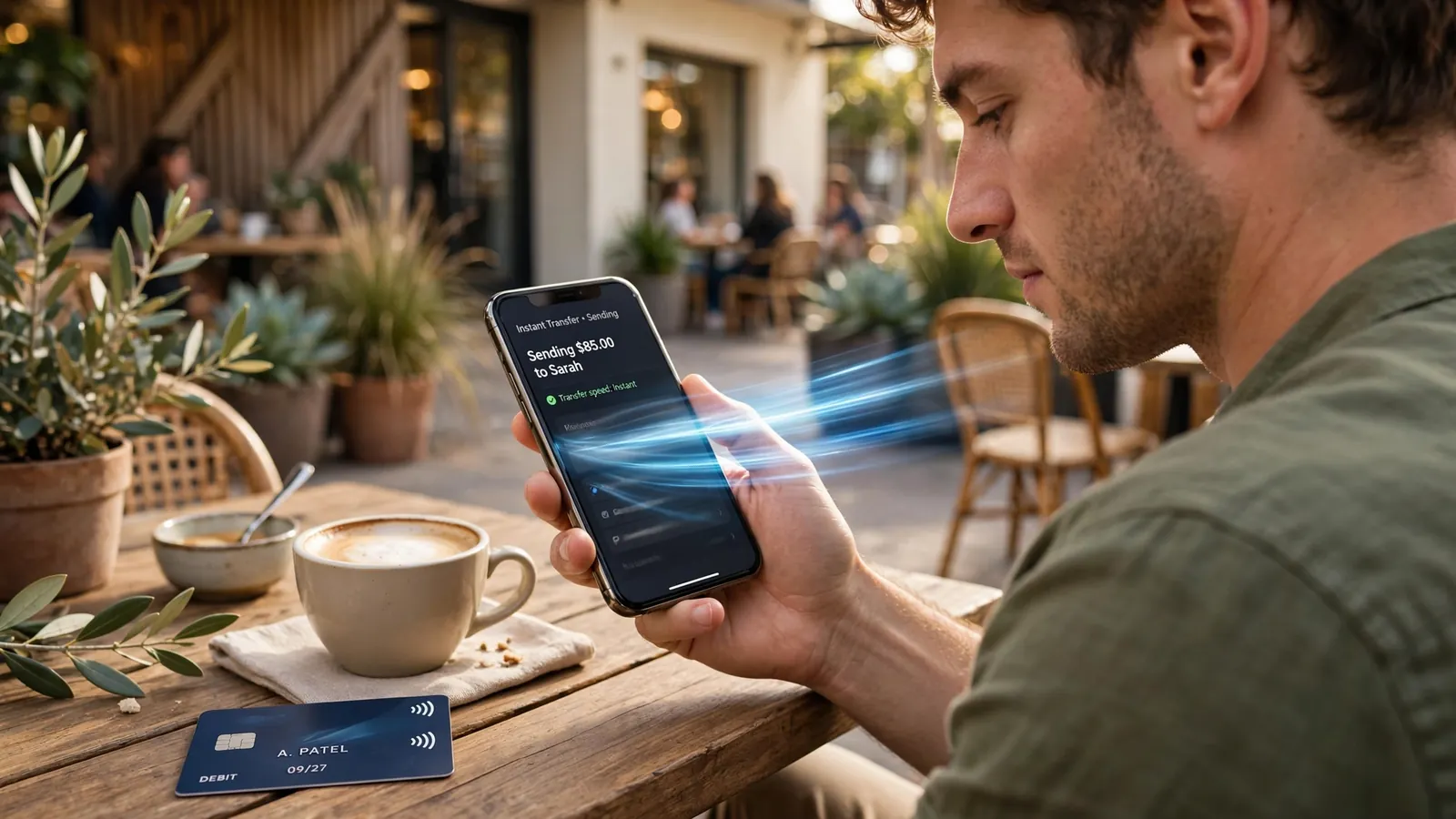
Dice play provides a useful way to distinguish a game’s outcome from the movement of SOL between wallets. A result displayed on a casino interface is part of the platform’s game process; it is not, by itself, evidence that a blockchain transaction has occurred. The network becomes relevant when SOL is transferred, such as when funds move to or from a wallet. No particular dice game or operator availability can be inferred from Solana’s transaction characteristics.
A specialist review reports that Solana transactions can confirm in about 400 milliseconds, with balances updating immediately. That figure describes reported network behaviour, not the time required for a casino to approve or initiate a transfer. A platform may still apply its own checks or processing steps, so a quick confirmation on-chain does not establish that a withdrawal request will be handled just as quickly.
This distinction matters when interpreting a dice balance. A balance shown in a game may be an internal account record rather than a wallet balance visible on Solana. A change in the interface therefore does not necessarily mean that funds have been sent to an external address. Conversely, once a transfer is broadcast, the network transaction and the operator’s account handling are separate processes.
SOL transfers are irreversible. If funds are sent to the wrong address, they may be permanently lost; a displayed game balance cannot reverse that transaction. Offshore operators are prohibited from providing online casino games to Australian residents under the Interactive Gambling Act 2001. Using an offshore platform is not legally safe merely because a player has not been prosecuted. Australian authorities also cannot provide ordinary recourse if an offshore operator withholds funds or closes its service. Using a VPN may expose an account to seizure and loss of funds.
KYC checks may be required for larger withdrawals or bonus cashouts, and the platform’s terms can affect whether a displayed balance is withdrawable. Cash-out conditions should therefore be understood before any deposit, rather than only after a win. SOL’s price can also move between deposit and withdrawal, reducing the Australian-dollar value of winnings even when the token amount is unchanged.
In practical terms, Solana’s reported confirmation speed is only one part of a transaction. It does not verify a game’s outcome, guarantee access to funds, or remove the risks associated with an offshore casino account.
Casino Games, Bonus Terms, and Effective Value
A promotion’s headline amount does not show how much value can be withdrawn. Its practical worth depends on the wagering requirement, which funds count toward that requirement, how each game contributes, any time limit, and any cap on cashout. These conditions need to be considered together: a generous-looking bonus may require extensive play, while restrictions on eligible games can make the requirement harder to complete.
Bonus funds are not equivalent to withdrawable cash. Winnings generated from them must be wagered with real money before withdrawal. Free-spin winnings may also be credited as bonus funds rather than cash, with a separate wagering condition. A specialist review describes a case in which that condition was 50x; this is an example of a reported term, not a standard that applies to every promotion. The distinction between bonus balance and cash balance matters because the former can remain subject to conditions even after a game produces a win.

Game contribution rates alter the amount of play that counts. Slots may contribute 100% toward wagering, whereas blackjack or roulette may count at only 10–20%. If a game contributes less than its stake, more total play is needed to meet the same requirement. A promotion that permits a broad range of games may therefore still favour some games over others. Terms should specify which games qualify and whether contribution differs by game.
A specialist review describes assessing bonus value by considering playthrough, contribution rates, time limits and maximum cashout caps together. That approach is more informative than comparing headline offers alone, although it cannot establish that a promotion will produce a profit. The house edge remains relevant to play, and fulfilling a wagering requirement does not remove the possibility of losing the funds.
The applicable conditions should be read before any deposit, including rules for bonus activation, eligible games, expiry and withdrawal. Larger withdrawals or bonus cashouts may trigger KYC checks requiring identification. Offshore casinos are prohibited under the Interactive Gambling Act 2001 from providing online casino games to Australian residents, and the absence of a prosecution does not make their use legally safe. If an offshore platform withholds funds, Australian authorities provide no recourse. VPN use may also lead to account seizure and loss of funds.
SOL Deposits, Minimums, and Price Exposure
A minimum deposit stated in SOL is a token amount, not a fixed Australian-dollar cost. A specialist review reported minimums from 0.01 to 0.1 SOL, corresponding to approximately AUD$2.80–$28 at April 2026 prices. That conversion is time-sensitive: a quoted AUD value can change as SOL’s market price moves, and the reported range should not be treated as a universal requirement across offshore operators.
This distinction matters when setting a gambling budget. The amount of SOL sent may remain the same while its Australian-dollar value changes. If SOL falls in value between deposit and withdrawal, winnings returned in SOL may be worth less in AUD than expected; a rise can alter the value in the other direction. The balance displayed by a casino therefore does not, by itself, establish the funds’ value in Australian dollars.
The exposure continues after play ends. A withdrawal may be held in an account while a platform processes it, leaving the user exposed to price movements until the SOL is received and converted. Larger withdrawals or bonus-related cashouts may also prompt KYC checks requiring identity documents. These are separate from the token’s market risk and can affect when funds become available.
Before depositing, the casino’s cash-out terms should be read, including any conditions that apply to withdrawing funds. SOL transfers are irreversible: sending funds to the wrong address can cause permanent loss. A cryptocurrency wallet address should be checked carefully before a transfer is authorised.
These payment considerations do not make offshore casino use legally safe. Under the Interactive Gambling Act 2001, offshore operators are prohibited from providing online casino games to Australian residents. The law targets operators rather than directly penalising individual players, but the absence of player penalties does not amount to legal protection. Offshore operators offer limited consumer protection, and Australian authorities cannot provide recourse if funds are withheld or a platform closes. Using a VPN may also lead to account seizure and loss of funds.
A minimum shown in SOL is consequently only one part of the funding decision. Its Australian-dollar equivalent is variable, and the amount received after withdrawal can differ in value from the amount deposited. The quoted minimum from a specialist review is a dated indication, not a stable AUD threshold or evidence that any particular operator is suitable for Australian users.

Solana Fees and Casino Transactions
Solana’s network fee is the charge for processing a transaction on the blockchain. The reported average is $0.00025 USD per transaction, a near-zero cost compared with the value of many transfers. That figure applies to the network transaction; it does not establish that a casino account is free of other charges.
A casino may set its own payment terms, and its internal handling of a transaction is separate from blockchain processing. A low network fee therefore does not show how quickly a platform will credit a deposit or approve a withdrawal. Nor does it guarantee that a withdrawal will be completed as soon as the network records it. Any casino-imposed charge and the conditions for cashing out need to be considered independently of Solana’s fee.
The fee is also distinct from the amount at risk. SOL transfers are irreversible: an incorrect address can result in permanent loss. SOL’s market price can change between deposit and withdrawal, reducing the Australian-dollar value of funds even when the network fee remains small. Larger withdrawals or bonus cashouts may prompt KYC checks requiring identity documents.
For Australian residents, low transaction costs do not change the legal position. The Interactive Gambling Act 2001 prohibits offshore operators from providing online casino games to people in Australia. Using an offshore casino is not legally safe merely because players have not been prosecuted; Australian users also lack legal protection if funds are withheld or a platform closes. Use of a VPN may lead to account seizure and loss of funds.
Near-zero network fees can make Solana transfers inexpensive, but they describe only one part of a payment. They do not establish an operator’s charges, processing practices, or suitability for Australian residents.
What is the minimum deposit for a Solana casino?
Minimum deposits typically range from 0.01 to 0.1 SOL, approximately AUD 2.80–28 at April 2026 prices.
How do I play at Solana online casinos from Australia?
The usual payment route is to deposit AUD into an Australian exchange, buy SOL, then send it to the casino’s deposit address. Australian law prohibits offshore operators from offering online casino services to residents, even though individual players are not directly penalised under the Act.
How does ACMA protect Australian online gamblers?
ACMA enforces the Interactive Gambling Act by blocking unlicensed offshore gambling websites and maintains a public Gambling Prohibition Register listing over 200 sites as of 2026. This does not give players Australian-law protection if an offshore casino freezes an account or withholds winnings.
Is it legal to use Solana casinos in Australia?
Australians can legally buy, hold and transfer SOL, but the Interactive Gambling Act prohibits offshore operators from offering online casino services to Australian residents. The Act targets operators rather than directly penalising individual players, but Australians using offshore casinos have no Australian-law protection if funds are withheld.
What fees, limits, and speeds apply to SOL casino deposits?
Minimum deposits typically range from 0.01 to 0.1 SOL; the average Solana transaction fee is about US$0.00025. Network transfers confirm in about 400 milliseconds, but casino crediting and withdrawals can take longer: automated withdrawals may take 5–15 minutes, while manual processes can take up to 72 hours. Some casinos charge withdrawal fees of 0.1%–1%.
How do I make a SOL casino deposit?
Deposit AUD into an Australian exchange, buy SOL, and send it to the casino’s SOL deposit address using the matching asset and network. Check the address carefully: Solana transfers are irreversible, and a network confirmation does not guarantee the casino has credited the balance yet.
Can I deposit other cryptocurrencies at a Solana casino?
Some Solana casinos also accept USDC on the Solana network, so deposits are not always limited to SOL.
Created by the ”Rizspin Casino” editorial team.