
Understand the Rules Before Choosing a Pokie
This guide explains legal limits on offshore real-money play and the practical differences between demos, jackpots, volatility and RTP settings.

Table of Contents
- Online Pokie Games in Australia: Legal Status and Enforcement
- What the Term “Pokie Machine” Covers
- Free Play and What Demo Results Can Show
- Pokies in Australian Casinos: The Perth Example
- Game Features, Progressive Jackpots and Feature Buys
- How Pokie Odds Work: Independent Spins and Volatility
- Real-Money Play, Deposits and Offshore Risks
- Pokie Apps and Playing on Mobile
- Recognisable Titles and New Game Releases
- RTP Settings and Practical Limits on Pokie Tips
Online Pokie Games in Australia: Legal Status and Enforcement
Australian law distinguishes between the conduct of an online gambling operator and that of a resident using an offshore service. Under the Interactive Gambling Act 2001, an operator commits an offence by providing real-money online pokie games to people in Australia. No Australian licence is available to authorise that service. The prohibition concerns the offer of the games to people living in the country, rather than only the location where a company is registered or its website is hosted.
The Act treats online pokies as prohibited interactive gambling services when they are supplied to customers in Australia. An offshore operator’s licence does not create permission to offer real-money pokie games to Australian residents. The same legal distinction applies if a site describes its products as online casino games or presents them through a browser or other digital format: the key issue is that real-money gambling is being offered to people in Australia.
The resident’s position is different. An Australian who plays real-money pokie games online with an offshore operator does not, by that act, commit an offence under the Interactive Gambling Act 2001. That does not make the operator’s service lawful in Australia, nor does it amount to local approval or oversight of the site. The legal prohibition on providing the service and the absence of an offence for the player are separate points, and should not be conflated.
Top operators
Choosing where to play pokies involves more than the games themselves; it is also worth checking the operator details and payment information available. This list gives a concise reference point as you consider your options in Australia.
-
DragonSlots Casino
- License
- Curacao Gaming Authority (Jumpman Gaming Ltd)
DragonSlots Casino is listed with a Curacao Gaming Authority license held by Jumpman Gaming Ltd.
-
SpinsUp
- License
- Curacao Gaming Control Board OGL/2023/174/0082 (Dama N.V.)
SpinsUp is listed with Curacao Gaming Control Board license OGL/2023/174/0082, held by Dama N.V.
-
JeetCity Casino
- License
- Curacao eGaming (Dama N.V.)
JeetCity Casino is listed with a Curacao eGaming license held by Dama N.V.
-
Roby Casino
- License
- Curacao eGaming (Roby Games Ltd)
Roby Casino is listed with a Curacao eGaming license held by Roby Games Ltd.
-
Neospin
- License
- Curacao Gaming Control Board OGL/2023/176/0095 (Hollycorn N.V.)
Neospin is listed with Curacao Gaming Control Board license OGL/2023/176/0095, held by Hollycorn N.V.
-
Rollero Casino
- License
- Curacao Gaming Control Board OGL/2023/176/0095 (Hollycorn N.V.)
Rollero Casino is listed with Curacao Gaming Control Board license OGL/2023/176/0095, held by Hollycorn N.V.
-
Kingmaker
- Payout speed
- crypto ~90 minutes, fiat 1-5 days
- Min. deposit
- A$30
Kingmaker lists crypto payouts at about 90 minutes and fiat payouts at 1–5 days. Its minimum deposit is A$30.
-
SkyCrown
- License
- Tobique Gaming Commission
- Payout speed
- crypto ~10-15 minutes, fiat 1-5 days
- Min. deposit
- A$30
SkyCrown is listed with a Tobique Gaming Commission license. It gives crypto payout timing of about 10–15 minutes, fiat timing of 1–5 days, and a minimum deposit of A$30.
-
Ricky Casino
- Payout speed
- crypto under 1 hour, PayID 1-3 business days
- Min. deposit
- A$20 (A$30 to qualify for the bonus)
Ricky Casino lists crypto payouts in under an hour and PayID payouts in 1–3 business days. The minimum deposit is A$20, or A$30 to qualify for the bonus.
-
Thor Casino
- License
- Curacao – Antillephone N.V. (Versus Odds B.V.)
- Min. deposit
- EUR 20
Thor Casino is listed with a Curacao license from Antillephone N.V. (Versus Odds B.V.). Its stated minimum deposit is EUR 20.
This distinction also limits what a search result or a site’s own claims can establish. A website may be accessible, may describe itself as licensed overseas, or may offer an online pokie machine to Australian users; none of those circumstances gives it an Australian licence. Conversely, an Australian resident’s use of an offshore site does not change the operator’s legal position under the Act. The relevant rule concerns the provision of real-money online pokie machine games to people in the country.
ACMA’s enforcement role
The Australian Communications and Media Authority, commonly known as ACMA, oversees compliance with federal interactive gambling rules and enforces the Interactive Gambling Act. Its work includes responding to prohibited services operating in or targeting Australia. Enforcement is not limited to a statement that a service is unlawful: ACMA can ask Australian internet service providers to block access to websites that supply prohibited interactive gambling services or advertise them in Australia.
Blocking can make a site harder to reach through Australian internet connections, but it is an enforcement measure directed at access to a website. It does not turn an offshore service into a locally authorised one, and it should not be read as a complete account of the legal status of every service. The underlying rule remains that operators must not offer real-money online pokies to people in Australia.


ACMA reports that, following enforcement activity, it has blocked more than 1,455 illegal gambling and affiliate websites since November 2019. The scale of that figure indicates that action has extended beyond individual gambling operators to websites involved in promoting such services. The number is a cumulative count of blocked sites, not a count of Australian residents who have played online or of operators holding local permission.
Published accounts also give different totals for illegal services that have withdrawn from the Australian market since ACMA began enforcing the rules in 2017. One figure is more than 210 services; another is more than 190. These are conflicting reported counts, rather than a single settled total. They nevertheless describe withdrawals following enforcement, not licences granted to services or a change in the statutory restriction.
For an Australian resident considering whether a real-money online pokie service is lawful, the central distinction is therefore between the provider and the player. The Act prohibits operators from supplying these games to people in Australia, while it does not make the resident’s act of playing with an offshore operator an offence under that Act. ACMA’s blocking powers and recorded enforcement actions concern the availability and promotion of prohibited services; they do not establish a local licensing route for online pokies.
What the Term “Pokie Machine” Covers
A pokie machine is a game whose rules determine how symbols, wagers and prizes are connected. The term can describe a physical electronic gaming machine or an online version, but it does not identify one standard set of rules. Two games that look similar may differ in their paytables, paylines and volatility, so the name alone does not establish how a game behaves.
Paytable
Sets out the prizes associated with particular symbol combinations or other game outcomes.
Paylines
Describe the patterns on which qualifying symbols can produce a prize.
Volatility
Describes a game's payout pattern, ranging from frequent small amounts to infrequent larger amounts.
A paytable sets out the prizes associated with particular symbol combinations or other game outcomes. It is part of the rules, not a promise that a particular combination will occur. Comparing paytables can show that titles assign different prizes to outcomes, but the table needs to be read alongside the rest of the game’s rules. A headline prize, for instance, does not by itself describe the range of possible results or how frequently a game pays.
Paylines describe the patterns on which qualifying symbols can produce a prize. Some games have a fixed number of paylines; others use a variable number. The distinction matters because the lines form part of the game’s structure and may affect which symbol arrangements count under its rules. A screen with many symbols is not enough to determine how wins are assessed: the relevant information is the game’s paytable and stated paylines.
These features help explain why “pokies machine” is not a single category with uniform play. A title may have a different prize structure from another title, even when both are presented as familiar reels. The title and artwork are not substitutes for the rules. The paytable and line structure provide more direct information about what combinations are recognised and how prizes are assigned.
Volatility is another way of describing a game’s payout pattern. A low-volatility machine tends to pay smaller amounts more often, while a high-volatility machine pays less often but can produce larger amounts. This is a broad profile, not a forecast of what will happen in a particular session. It also does not rank games by quality: a preference for more frequent, smaller payouts is different from a preference for less frequent, larger ones.

The phrase “best pokie machine” therefore has no single answer based on the title alone. What counts as suitable depends on which features matter in the comparison: the paytable, the number and type of paylines, or the volatility profile. These characteristics can be described, but they do not establish that one game will produce a better result for every player. Nor does a familiar name prove that its rules match those of another version carrying the same title.
In Australia, “pokie machine” may refer to a machine in a venue or to a game delivered online. That shared label does not mean the formats have identical rules or availability. The machine’s stated information is the starting point for identifying its features; the broad category is not enough to infer its prizes, line structure or payout pattern.
The phrase can also be used in discussions of the price of a machine as equipment. That is separate from the rules of the game and from the amount associated with a spin. A machine’s purchase price cannot, by itself, indicate its paytable or volatility. Keeping these meanings distinct makes comparisons clearer: game features describe how the game is structured, while equipment cost refers to the machine as a product.
For a comparison of pokie machines, the useful unit is thus the individual game and its stated rules, not a generic label or an unsupported ranking. Examining those details can distinguish one format from another without implying that any title is inherently the best pokie machine in Australia.
Free Play and What Demo Results Can Show
A free-play or demo mode can provide a way to inspect a pokie’s presentation without staking money. Where a game offers this mode, it may show the same visual layout and controls as its paid version, allowing its reels, symbols and on-screen instructions to be viewed in operation. The value is chiefly familiarisation: a player can learn how the interface behaves and what features the game describes, without treating a run of demo spins as evidence about future results.
The distinction between demonstration and real-money play is essential. Demo outcomes do not indicate what would happen with money at stake. Pokie outcomes are produced by random-number software, and one spin does not affect the next. A favourable sequence in free play therefore provides no basis for expecting a similar sequence later; an unproductive demo run provides no basis for expecting a reversal either. The same caution applies to any apparent pattern noticed while watching the reels.
What a demo can help establish
A demonstration can make some design details easier to understand than a static image or short description. It can show how the reels move, how symbols appear, and where the game displays its instructions. A player can also explore a theme and the order in which the interface presents information. These observations concern the software’s presentation and operation, not the likelihood of a particular outcome.

The distinction matters because a game’s visual activity can feel informative even when it is not. Repeated spins may make a feature seem close to activating, or a sequence may look as if it is developing a pattern. In a random game, those impressions do not change the chance of what comes next. A demo can illustrate what the software displays; it cannot reveal a predictive signal in the results.
The interface may also help identify whether a game’s rules are clear to the person using it. If instructions are difficult to locate or a feature is hard to interpret, that is useful information about the experience of navigating the game. It does not establish that the game is more generous, safer or more suitable than another one. Those are separate claims, and a sequence of demonstration results cannot substantiate them.
Limits of free-play results
A long session in demo mode does not turn the results into a forecast. The random process still produces individual outcomes, and a sample of spins cannot establish what a later session will return. Recording wins, losses or near-misses during free play may describe that particular demonstration, but it cannot determine how a real-money session would unfold.
Nor does a demo provide a sound test of a pokie machine strategy. Changing the timing of spins, repeating a sequence of button presses or stopping after a particular visual event cannot be inferred to improve future results from what happened in free play. The demonstration may permit experimentation with controls, but such testing concerns interaction with the software, not a method for directing random outcomes.
Do
- Use demo mode to learn the interface and controls.
- Examine the game's appearance and instructions before playing.
- Treat demo results as outcomes of that specific session only.
Don't
- Treat demo wins as evidence of future real-money results.
- Assume patterns in free play are predictive signals.
- Use demo results to test or validate a betting strategy.
Free play can therefore be useful in a narrow, practical sense: it allows the game’s appearance and instructions to be examined before any decision about using it. It is not a substitute for evidence about real-money outcomes, and it cannot remove uncertainty. Any results shown in a demo should be read as the results of that demonstration alone, not as a preview, promise or estimate of what a later paid session would produce.
Pokies in Australian Casinos: The Perth Example
Crown Perth is Perth’s only legal land-based casino. Its gaming floor contains more than 2,500 machines, providing a substantial range of electronic games in one venue. That figure describes the scale of the floor, not the number of distinct games or the likelihood of a particular machine paying out. It also does not establish that one Australian pokie machine is better than another.
For anyone comparing machines in a casino, the information displayed on the machine is a more useful starting point than its appearance or reputation. In Western Australia, every legal pokie must show its rules, paylines and prize table. These details explain how a game awards prizes and which combinations or features matter. A prize table can help clarify what a particular result pays, but it is not by itself a complete measure of the machine’s overall payout percentage.
The distinction matters when claims are made about the highest-paying pokie machine. Crown Perth does not publish an RTP list for each individual machine, so public information does not allow a reliable machine-by-machine ranking. The broad range reported for most machines on the floor is 87% to 92% RTP. That range is a general description, not a figure attached to every machine, and it cannot identify which specific machine has the highest RTP.

RTP is a measure associated with a game over extensive play, rather than a promise about what a single session will return. A displayed prize table and a published RTP figure therefore answer different questions: the former sets out prize rules, while the latter describes a long-run return measure. Where no individual RTP is published, a visitor should not infer one from the size of a possible prize, the number of paylines or the machine’s presentation.
This also limits what can be said about pokie machine payouts at Crown Perth. A large prize listed on a machine does not show how frequently it is awarded, and a machine’s popularity does not establish its payout percentage. Without machine-specific RTP information, comparisons between individual casino pokie machines remain incomplete. The available range can provide context for the floor as a whole, but not a basis for naming a “best” machine.
The same caution applies to descriptions such as “loose” or “high paying” when they are not tied to a clearly stated, machine-specific figure. Rules, paylines and prize tables are required disclosures, but they do not convert a general impression into evidence that a machine will return more during a particular visit. A careful comparison should distinguish the information actually shown on the machine from assumptions about its performance.
The Perth example is specifically a land-based casino context. Western Australia has no legal online casino market; Crown Perth is the legal casino venue in Perth. A casino pokie machine on its floor is therefore not interchangeable with an online game offered through an offshore service. The machine count, displayed rules and broad RTP range describe the physical venue and should not be read as evidence about online availability or online payout settings.
In practical terms, the information available at Crown Perth supports a limited conclusion: there is a large selection of machines, and legal pokies in Western Australia must display key game information. It does not support a definitive ranking of individual machines by payout. Without a machine-by-machine RTP list, claims about the best or highest-paying option go beyond what the published figures establish.
Game Features, Progressive Jackpots and Feature Buys
Pokie formats can differ in how they handle bonus rounds and jackpots, not just in their symbols or presentation. Two features that illustrate this are networked progressive jackpots and feature buys. Each changes how a game is structured, but neither establishes that a particular pokie is better than another.
A networked progressive links eligible machines, or machines across casinos, so that play contributes to a shared jackpot. Titles such as Lightning Link, Dragon Link and Cash Express are examples of games described as operating in this way. Because the prize pool is shared across a network, its growth is not confined to one machine. The jackpot is a separate feature from the ordinary prize table; the presence of a progressive prize does not by itself show how frequently it will be won or what a typical session will return.
Feature-buy slots take a different approach. Rather than waiting for a bonus feature to occur through ordinary play, the game offers a paid option to trigger that feature immediately. The bonus is often a free-spins round, though the precise feature depends on the game. A specialist review reports feature-buy prices of 50 to 100 times the base bet. That range should be treated as a reported example, not as a universal price or a standard that applies across games. Availability and terms can differ by title and version.

The purchase changes the timing of access to a bonus; it does not make the bonus outcome known in advance. A triggered round may still produce different results from one play to another. The displayed rules are therefore important for understanding what the purchase activates and how the feature works. The price should also be considered as part of the total stake, rather than as a cost separate from play.
These mechanics can appear in different combinations. A game may have a progressive jackpot without a feature-buy option, or a bonus-purchase option without a shared jackpot. The labels alone do not describe every condition: jackpot eligibility, bonus rules and purchase terms are specific to the game. Comparing those details is more informative than treating “progressive” or “feature buy” as a quality rating.
The distinction matters when describing pokie machine games in a casino or digital catalogue. A networked prize concerns how a jackpot pool is assembled; a feature buy concerns how a bonus is entered. Neither label establishes that a game offers better value, and a large advertised jackpot is not evidence of a likely payout. These are design differences, not reliable predictors of an individual result.
How Pokie Odds Work: Independent Spins and Volatility
A pokie’s outcomes are generated by a random number generator (RNG). Each spin is independent of the one before it: a previous win, loss or long run without a payout does not change the odds of the next result. The machine does not become “due”, and a recent result is not a reliable signal of what will follow.
This independence is important when interpreting short sequences. A cluster of wins can occur, as can a stretch with few or no payouts, without either pattern establishing what the next spin will do. Past results may describe what happened during a session, but they do not provide a predictive method for choosing a machine or timing a spin. The same principle applies to online pokies: the RNG determines outcomes rather than a visible pattern in earlier results.
Volatility describes the pattern of payouts, not a guarantee about the amount a game will return in an individual session. Low-volatility pokies tend to pay smaller amounts more frequently. High-volatility pokies pay less often, but their wins can be larger. These are different payout profiles; neither means that a player is more likely to finish ahead.
The distinction matters when comparing games described as the best pokie to play or the best pokie to win. Those labels cannot establish that a particular machine will produce a win. A lower-volatility game may better match a preference for more frequent, smaller payouts, while a higher-volatility game may involve longer gaps between wins and the possibility of larger payouts. The pattern remains uncertain in any particular run of spins.
Pokie sounds and visual effects can accompany a result, but they do not provide evidence that the next spin is more or less likely to pay. Nor can observing another player’s results reveal a machine’s next outcome. The RNG-based independence of spins means that apparent streaks do not alter future results.
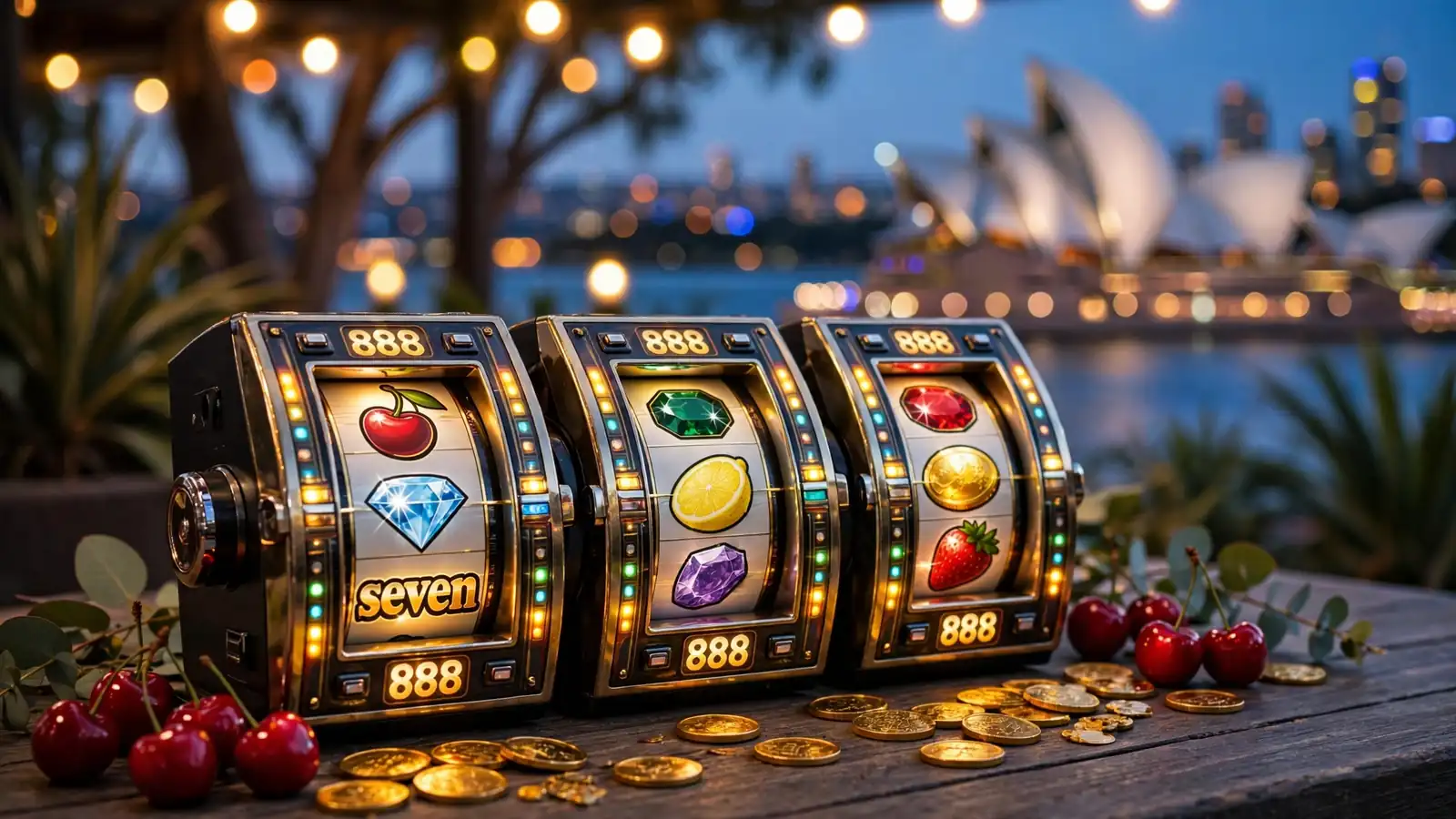
Understanding how to play a pokie machine therefore does not involve identifying a “hot” machine from recent outcomes. A game’s observed results over a short session are not enough to establish its underlying payout pattern. Volatility offers a broad description of payout frequency and size, not a forecast for a particular player or session.
Long-run measures such as RTP describe outcomes across a very large number of spins; they should not be read as a prediction for an individual session. Short-run results can differ substantially from such a long-run measure. Consequently, pokie machine odds cannot be inferred from recent wins, losses, sounds or a perceived sequence. No volatility profile removes the uncertainty of individual spins.
Real-Money Play, Deposits and Offshore Risks
Real-money pokie play online is not legally supplied to people in Australia. The Interactive Gambling Act 2001 prohibits operators from offering these games to Australian residents, and no Australian licence authorises an offshore site to provide them. An Australian resident who plays with an offshore operator does not, however, commit an offence under that Act. The distinction is between the operator’s prohibition and the player’s legal position; it does not create local protections for deposits or winnings.
Payment options can make an offshore service appear accessible, but the ability to deposit is not evidence of Australian authorisation or effective oversight. Specialist affiliate reviews of operators catering to Australians describe deposits by Visa, Mastercard and bank transfer, as well as cryptocurrency options such as Bitcoin and Ethereum. These accounts reflect reported offerings, which can change. They should not be read as a guarantee that a method will work for a particular account, or that a payment dispute can be resolved through Australian gambling regulation. Credit cards should not be used for online gambling services.
Withdrawal terms deserve separate scrutiny from deposit methods. An offshore casino may withhold winnings without providing effective legal recourse in Australia. Withdrawals may remain pending for 24–72 hours, and some casinos may use that interval to encourage a player to reverse the request and continue gambling. A displayed balance is therefore not equivalent to money received. Bonus funds can also carry conditions: free-spin winnings may be treated as bonus funds and subject to wagering requirements and cashout limits. Requirements such as 35x or 40x can make a bonus difficult to clear; the applicable terms, rather than the headline offer, determine what can be withdrawn.
These risks are distinct from the mechanics of a real pokie or a demo version. A demo does not involve a cash deposit or establish how a real-money session will perform. Moving from a pokie machine demo to real-money play changes the financial exposure, not the underlying legal status of an offshore service.
Depositing through a familiar bank channel, card brand or digital currency does not make an offshore operator locally licensed, nor does it guarantee that a withdrawal will be honoured. Because dispute resolution and regulatory recourse may be limited, the payment route alone cannot establish that funds are protected. No payment method removes the central uncertainty: the service is offered from offshore, outside the Australian legal framework for online casino games.

Pokie Apps and Playing on Mobile
A pokie played on a phone is still the same kind of online game as one accessed through a computer. An app changes the delivery format: it may provide a mobile interface to a service, while some services can instead be opened in a phone’s web browser. Neither a dedicated app nor a mobile-friendly website gives a game a different legal status in Australia.
There is no Australian licence under which an operator can offer real-money online pokies to residents. Making a service available through an app does not create such a licence or make the service locally authorised. App-store presence, a polished interface or compatibility with Australian phones should therefore not be treated as evidence of Australian regulatory approval. The relevant distinction is the service being provided, not the device used to reach it.
The phrase “pokie machine app” can also refer to different things: a game interface, an operator’s broader app, or software for a physical gaming machine. These are not interchangeable. An API, or application programming interface, is a way for software systems to communicate; it is not, by itself, a pokie or a licence. References to a pokie API usually concern technical connections between systems rather than a feature a player uses to spin a game.
Mobile access also does not establish that a jackpot is available or that its terms match those shown elsewhere. Jackpot arrangements belong to the particular game and service, not to the fact that play occurs on a phone. Any description of a prize should be read in the context of the specific game and its applicable terms, rather than inferred from an app’s name or advertising.
Technical terminology
An API (application programming interface) is a way for software systems to communicate and is not a game or a licence itself.
The cost of a mobile pokie cannot be inferred from the word “app.” It may describe software access, while play itself may involve separate terms set by the service. Without details for a particular product, a general price would be misleading. Nor does a free download establish that real-money play is lawful in Australia.
Accordingly, “best” is not a meaningful technical category for mobile access alone. Screen layout and ease of navigation describe interface qualities, not legal authorisation or the nature of the game. An app remains a channel for accessing software; it does not change the legal position of real-money online pokies offered to people in Australia.
Recognisable Titles and New Game Releases
Names such as *Lightning Link*, *Dragon Link*, *Buffalo*, *Chilli*, *Queen of your own Nile*, *Book of Dead*, *Immortal Romance*, *Mega Joker* and *Mega Moolah* can help identify particular pokie titles. They are examples, not a ranking: recognition of a name does not establish that its game is newer, more rewarding or better suited to a particular player.
The distinction matters when looking for a new pokie machine or new pokie machine games. A title appearing in a recent promotion, catalogue or app does not by itself establish when the game was released. Nor does a familiar name indicate that a particular version is newly introduced. Without reliable release information tied to the specific title and version, “new” is not a conclusion that can be drawn from the name alone.
The same caution applies to claims of superiority. A title’s visibility or longevity is not evidence of better outcomes. Even published figures can be tied to a particular version rather than every game carrying that name; they should not be treated as a general property of the title. Names are useful for distinguishing games, but they do not substitute for checking the information attached to the specific version.

Some recognisable titles have features that are also discussed in connection with other games. For instance, *Lightning Link* and *Dragon Link* are among the names associated with networked progressive jackpots. That feature describes a game format, not evidence that either title is a new release or a better choice. *Cash Express* is another title associated with networked jackpots, but its inclusion alongside familiar names likewise says nothing about release timing.
For readers comparing pokie machine names, the practical value of a title is therefore limited but clear: it identifies what game is being discussed. Release status and claims of quality require separate evidence. A list of known names cannot, on its own, establish which games are recent or superior.
RTP Settings and Practical Limits on Pokie Tips
RTP describes the share of total wagers a pokie is designed to return across a very large number of spins. It is a long-run statistical measure, not a forecast for an individual session. A published RTP therefore cannot show what a particular player will receive, and a higher figure does not ensure a short-term win.
The figure also needs to match the version being played. Some providers let operators select among different RTP settings for the same game, so a figure quoted in a review or game description may not apply to every offering. The relevant setting should be checked in the game’s information or rules where it is disclosed. If the version cannot be confirmed, the published figure should not be treated as definitive.

Practical pokie tips cannot change the underlying outcome probabilities or turn past results into a reliable guide to future spins. Advice that presents a particular game, pattern or timing as a dependable way to win goes beyond what RTP can establish. Its value is better judged by whether it helps keep play within a planned budget, rather than by claims of improved returns.
A loss limit set before play provides a boundary for spending; it does not make losses predictable or guarantee that play will stop at a particular outcome. Once that limit is reached, continuing on the assumption that a return is due is not supported by the RTP figure. The measure is useful for comparing stated long-run settings, but it cannot remove the uncertainty of an individual session.
How much money do I need to play pokies?
At Crown Perth, minimum bets typically range from $0.20 to $2.00 per spin, depending on the machine.
What law governs online gambling in Australia?
The Interactive Gambling Act 2001 governs online gambling. It makes it an offence for operators to offer real-money online pokies to people in Australia.
Is there a strategy to win at pokies?
No strategy can make a particular spin more likely to win: each spin is random and independent, so past results do not affect future outcomes.
Created by the ”Rizspin Casino” editorial team.