
Check Whether a $5 Deposit Can Actually Go Through
A stated casino minimum and a payment method’s transaction floor are separate conditions, so the available route determines whether $5 can be deposited.

Table of Contents
- What a $5 Online Casino Deposit Actually Means
- Australia’s Regulatory Context for Offshore Casino Sites
- When a $5 Deposit Is Possible—and When It Is Not Practical
- Assessing Promotions Attached to a Small Deposit
- First Deposits and the Withdrawal Threshold
- What the Evidence Can Establish About Mobile Deposits
- Fees and Delays That Can Undercut a Low Deposit
- Why Payment Methods Often Set the Real Minimum
- A $5 First Deposit and Slot Wagering Terms
- PayID, Crypto and the Limits of a $5 AUD Payment
What a $5 Online Casino Deposit Actually Means
A stated $5 minimum describes a threshold, not necessarily a payment that can be completed through every available route. The operator may set no minimum deposit of its own, while a payment processor or method applies a separate floor. As a result, the amount shown in an account’s deposit terms and the smallest amount that can actually be sent need not be the same.
These are two distinct conditions. The operator’s threshold concerns what it will accept for an account deposit. The payment method’s threshold concerns the smallest transaction that method will process. For a deposit to go through, both conditions have to be met. If the operator sets no floor but a chosen payment route requires more than $5, that route cannot deliver a $5 deposit. A different route might have different terms, but the existence of a lower operator threshold does not establish that such a route is available.
This distinction matters when a casino is described as accepting a $5 deposit. The wording can refer to the operator’s own stated minimum without confirming that all listed payment options can process that sum. It may also describe a minimum available through only one route. The amount therefore needs to be understood in relation to the payment method, rather than treated as a universal threshold applying to every transaction.
Top operators
A $5 minimum-deposit claim is worth checking against each casino’s actual payment terms before you deposit. This list provides the specific licensing, deposit-minimum and payout details available for these operators.
-
DragonSlots Casino
- License
- Curacao Gaming Authority (Jumpman Gaming Ltd)
DragonSlots Casino is listed with a Curacao Gaming Authority license held by Jumpman Gaming Ltd.
-
SpinsUp
- License
- Curacao Gaming Control Board OGL/2023/174/0082 (Dama N.V.)
SpinsUp is listed under Curacao Gaming Control Board license OGL/2023/174/0082, held by Dama N.V.
-
JeetCity Casino
- License
- Curacao eGaming (Dama N.V.)
JeetCity Casino is listed with a Curacao eGaming license held by Dama N.V.
-
Roby Casino
- License
- Curacao eGaming (Roby Games Ltd)
Roby Casino is listed with a Curacao eGaming license held by Roby Games Ltd.
-
Neospin
- License
- Curacao Gaming Control Board OGL/2023/176/0095 (Hollycorn N.V.)
Neospin is listed under Curacao Gaming Control Board license OGL/2023/176/0095, held by Hollycorn N.V.
-
Rollero Casino
- License
- Curacao Gaming Control Board OGL/2023/176/0095 (Hollycorn N.V.)
Rollero Casino is listed under Curacao Gaming Control Board license OGL/2023/176/0095, held by Hollycorn N.V.
-
Kingmaker
- Payout speed
- crypto ~90 minutes, fiat 1-5 days
- Min. deposit
- A$30
Kingmaker has a stated minimum deposit of A$30. Its listed payout times are about 90 minutes for crypto and 1–5 days for fiat.
-
SkyCrown
- License
- Tobique Gaming Commission
- Payout speed
- crypto ~10-15 minutes, fiat 1-5 days
- Min. deposit
- A$30
SkyCrown is listed with a Tobique Gaming Commission license and a minimum deposit of A$30. Its stated payout times are about 10–15 minutes for crypto and 1–5 days for fiat.
-
Ricky Casino
- Payout speed
- crypto under 1 hour, PayID 1-3 business days
- Min. deposit
- A$20 (A$30 to qualify for the bonus)
Ricky Casino has a stated minimum deposit of A$20, or A$30 to qualify for the bonus. Its listed payout times are under an hour for crypto and 1–3 business days for PayID.
-
Thor Casino
- License
- Curacao – Antillephone N.V. (Versus Odds B.V.)
- Min. deposit
- EUR 20
Thor Casino is listed with a Curacao – Antillephone N.V. license (Versus Odds B.V.) and a stated minimum deposit of EUR 20.
A specialist review places the most common effective minimum for a usable Australian deposit in the $10–$20 AUD range. That figure is an attributed assessment, not a fixed rule for every operator or payment route, and it can change as payment arrangements change. It nevertheless illustrates why a nominal $5 threshold may not correspond to the amount required to make a deposit: the practical floor can be higher than the operator’s own stated one.
The word “minimum” can consequently refer to more than one point in the transaction. It may mean the lowest amount the operator says it accepts, the smallest amount a payment method can send, or the lowest amount that can pass through both sets of conditions. Only the last of these describes the effective deposit minimum for that particular combination. Treating the terms as interchangeable can make a low headline figure appear more broadly applicable than it is.

A $5 online casino deposit in Australia is therefore not established merely by a page displaying “$5 minimum.” The relevant terms must connect that amount to a payment route capable of processing it. If the operator gives no minimum of its own, that does not mean every payment method has no minimum. Conversely, a higher floor attached to one route does not by itself show that all routes have the same floor. The conditions are specific to the operator-method combination.
A useful distinction is between a quoted threshold and a completed transaction. The quoted threshold is a statement about acceptance; a completed transaction also depends on the payment method’s rules. A claim that a casino has a $5 minimum can be accurate in the narrower sense that the operator permits deposits at that level, while still failing to describe what a particular payment option will allow. Precision requires identifying which threshold the claim refers to.
The phrase “real-money deposit” does not alter that distinction. It identifies the type of transaction, but it does not resolve whether the operator’s minimum or the payment method’s minimum controls the amount that can be sent. Nor does a $5 figure, by itself, show that every listed route supports that amount. The amount needs to be read alongside the terms for the relevant payment option.

For comparison, the $10–$20 AUD range reported by a specialist review concerns the effective minimum described for a usable deposit in Australia; it should not be turned into a universal requirement. Individual terms may differ, and a stated amount may become outdated when an operator or processor changes its conditions. The careful reading is therefore not “every casino requires the same minimum”, but that an operator-level figure alone may not settle the amount a payment route will accept.
In practical terms, a $5 minimum is best read as a claim about one layer of the transaction until the payment method’s own minimum is clear. The operator’s threshold answers what the casino says it will accept. The payment route’s threshold answers what can be submitted through that route. A genuine $5 deposit requires those conditions to align; the lower figure on its own does not establish that they do.
Australia’s Regulatory Context for Offshore Casino Sites
An Australian-facing name, Australian-dollar figures or references to local payment options do not establish that an online casino is authorised to provide real-money games in Australia. The relevant federal framework is the Interactive Gambling Act 2001 (IGA), which prohibits operators from supplying online casino-style gambling to people physically located in Australia. This includes games such as poker, blackjack, roulette and pokies. The restriction concerns the service provided by the operator; placing a bet with an offshore casino is not itself a criminal offence for an individual player.
This distinction matters when interpreting claims about a $5 deposit at an Australian casino. A low deposit threshold describes a payment condition, not the legal status of the service accepting the payment. Nor does a foreign licence change the IGA’s application to services supplied to people in Australia. Most casinos using Australian branding operate under licences issued offshore, commonly in jurisdictions such as Curaçao, Malta or the Isle of Man. Such a licence may indicate oversight in the issuing jurisdiction, but it is not an Australian authorisation to offer online casino games.

The Australian Communications and Media Authority (ACMA) is the federal regulator responsible for enforcing the IGA and monitoring compliance with federal interactive-gambling rules. Its role includes taking action in relation to prohibited services. ACMA may ask Australian internet service providers to block websites that supply prohibited interactive gambling services or advertise them in Australia. A site’s appearance in search results, or its continued accessibility at a particular time, therefore cannot be treated as evidence that it has been approved domestically.
Enforcement has affected both gambling websites and associated promotional sites. Since November 2019, ACMA has blocked more than 1,455 illegal gambling and affiliate websites following enforcement action. Reported figures for services that have left the Australian market since enforcement began in 2017 do not align: one account gives a total above 210, while another reports more than 190. Those figures should be understood as conflicting reported counts, not combined into a single confirmed total. Both indicate that enforcement has led to services withdrawing from the market, while the exact count depends on the account cited.
The legal position also differs from the impression that can be created by offshore branding. A casino may present itself as serving Australian customers, quote deposits in Australian dollars or display localised material, but those features do not establish that its real-money games are lawful to provide in Australia. Likewise, a licence from another jurisdiction does not displace the federal prohibition. The relevant question is not simply where a company is registered or which regulator issued its licence; it is whether the service is being supplied to people physically located in Australia.
This framework places responsibility for the prohibited service on its provider, rather than making the individual act of betting at an offshore site a criminal offence under the IGA. That distinction should not be read as a statement that offshore casinos have local consumer protections or that a player can rely on Australian regulatory oversight if a dispute arises. ACMA’s authority is directed at compliance with federal interactive-gambling law, including enforcement measures such as access blocking; it is not an endorsement of a particular operator or a guarantee about account, payment or game outcomes.
Advertising is also part of the regulatory picture. The federal restrictions cover advertising prohibited interactive gambling services in Australia, and ACMA can seek blocking of sites that provide such services or promote them. Consequently, promotional language, Australian-themed branding or a reference to a small first deposit should not be mistaken for an official indication that a real-money casino is permitted to operate locally. The existence of a promotion does not alter the status of the underlying service.
For a person assessing an offshore casino, the main regulatory point is therefore a limit on what can be inferred: a stated $5 minimum, an Australian label or an offshore licence does not amount to Australian approval. The IGA prohibits the provision of real-money online casino games to people in Australia, while ACMA monitors and enforces the federal rules and can pursue access restrictions. A foreign licence and local-facing presentation describe features of the operator’s own setup; neither overrides that federal framework.
When a $5 Deposit Is Possible—and When It Is Not Practical
A $5 deposit can be technically accepted without being enough to make an account meaningfully usable. The distinction is between a payment passing the operator’s stated threshold and the remaining balance supporting any sustained play after the payment is credited. For a low amount, even small transaction costs or a game’s minimum stake can materially affect what is left.

A specialist review reported that some offshore operators accept deposits of $5 AUD through cryptocurrency. That is a reported case, not evidence that this amount is currently available across the market. Deposit rules can vary by operator and payment route, and a threshold listed in a review may not match the terms in force when a transaction is attempted. The figure should therefore be treated as a limited observation rather than a dependable Australian standard.
The same distinction applies to cryptocurrency minimums stated at a much lower level. A specialist review reported casino-set cryptocurrency thresholds as low as the equivalent of $1 AUD. A nominal minimum of that kind says only that the operator may accept a payment of that size; it does not establish that such a payment is practical. A transaction can incur costs, and the balance may be too small relative to the minimum stake for the games offered. The effective amount available for play can consequently be lower than the amount sent.

Acceptance is not the same as usability
A deposit threshold is a rule about whether a payment can enter an account. Practicality depends on what happens after that point. If transaction costs reduce the credited balance, a deposit close to the stated minimum leaves less to use. If the available games require stakes that take a substantial share of the balance, only a limited amount of play may be possible before the balance is exhausted. Neither circumstance changes the operator’s advertised minimum; both change what that minimum delivers.
This is why a $5 minimum deposit casino claim needs to be read narrowly. It may describe a payment route that accepts that amount under particular conditions, not a general minimum that applies to every method or remains available at all times. The payment route, the credited amount and the minimum stake are separate considerations. A low figure for the first does not establish favourable terms for the others.
For cryptocurrency, the amount sent and the value credited may also differ because the transaction itself can carry costs. Those costs matter more proportionally when the deposit is small. A payment accepted at the stated threshold could therefore leave a balance that is technically usable but offers little room for repeated bets. There is no basis for assuming that every operator calculates or presents these amounts in the same way.
What a $5 figure can establish
At most, a reported $5 threshold indicates that a small payment may be accepted through a particular cryptocurrency route at some offshore operators. It does not establish that every operator accepts it, that the amount is available through other payment methods, or that the deposit supports a practical session. Nor does a low threshold itself demonstrate that the service is lawful to provide in Australia. Under the Interactive Gambling Act 2001, real-money online casino games are prohibited services when offered to people in Australia; this discussion describes reported payment terms and is not an endorsement or invitation to use them.
The sound distinction is therefore between nominal acceptance and usable value. A $5 casino deposit may satisfy a stated payment minimum in a reported case, while transaction costs and game minimum bets can make the resulting balance impractical. A lower cryptocurrency threshold does not resolve that issue: it makes acceptance possible at a smaller amount, but does not show that the amount supports meaningful play.

Assessing Promotions Attached to a Small Deposit
A low entry amount does not, by itself, show whether a promotion is usable. The deposit needed to qualify is only one condition. The wagering requirement, eligible games, permitted stake and maximum cashout can each affect whether bonus funds—and any winnings linked to them—can be accessed.
A specialist review reports wagering requirements of 35× to 50× the bonus amount for some low-deposit promotions. These figures should be treated as reported terms, not as a fixed rule for every offer. The multiplier also needs to be read alongside its calculation base: it may apply to the bonus, the deposit, or a combined amount. Those bases produce different totals, so the wording in the promotion’s terms matters.
The effect of a multiplier is clearer when expressed as total wagering. A $1,000 bonus subject to 35× wagering requires $35,000 in bets before bonus winnings can be withdrawn. That calculation illustrates why the advertised bonus amount is not a measure of how readily its value can be realised. For a small deposit, the bonus may be modest while the associated wagering remains substantial relative to the funds available.
Game weighting changes the amount of qualifying play credited toward that requirement. Pokies are commonly assigned 100% contribution in the terms described, whereas blackjack and roulette may count for only 10% or 20%. A bet on a lower-weighted game therefore advances the requirement more slowly than the same bet on a fully weighted game. The distinction is material: a promotion can permit a game while crediting only a fraction of the wagering on it.
Do
- Check the wagering multiplier and its calculation base
- Verify game weighting for each eligible game
- Confirm the maximum permitted stake per spin
Don't
- Rely on the headline bonus amount alone
- Ignore the maximum cashout cap
- Assume all games contribute equally to wagering
Stake restrictions add another condition. Some promotions set a maximum permitted bet while wagering is in progress. If the limit is expressed as a maximum stake per spin, exceeding it can void winnings. A promotion’s general deposit threshold or headline amount does not override that restriction. The maximum bet should therefore be assessed together with the wagering multiplier and eligible-game rules, rather than treated as a minor detail.
A maximum cashout cap limits the amount that can be paid out under the promotion, even if the wagering requirement has been completed. Its effect depends on the cap’s wording: the terms need to establish whether it applies to bonus winnings or to a broader balance. Without that distinction, the headline value of a promotion may overstate what can ultimately be retained.
The practical assessment is consequently a set of linked checks: the qualifying minimum deposit, the multiplier and its calculation base, game weighting, the maximum stake during wagering, and any cashout cap. These terms determine whether a small-deposit promotion has conditions that can be met and what value may remain accessible afterward. A low deposit threshold alone establishes neither point.

First Deposits and the Withdrawal Threshold
A small first deposit and the amount needed to cash out are separate thresholds. A casino may accept a $5 deposit without allowing a payout of that size. This distinction matters because an accepted deposit does not, by itself, establish that the resulting balance can be withdrawn.
A specialist review reports minimum withdrawal amounts in the range of A$20 to A$50. That is a finding from one review, not a dependable market-wide rule: thresholds can differ between operators and may change. It nevertheless illustrates why a low entry amount does not necessarily provide equivalent access to funds. If the balance remains below an operator’s cash-out floor, the amount may not yet qualify for withdrawal.
The practical consequence depends on the terms attached to the account. A minimum cash-out condition may mean that a balance has to reach the stated threshold before a request can be submitted. It does not establish what happens to a balance below that level; the applicable terms determine whether it can be retained, increased through further play, or handled in another way. No assumption about those outcomes is warranted without the operator’s written rules.
The threshold also needs to be distinguished from the amount originally deposited. A deposit is an incoming payment, while a cash-out is a separate transaction governed by withdrawal conditions. The two amounts need not match. Thus, a $5 deposit casino for a new player may be possible in the limited sense that the payment is accepted, yet still leave the player below the stated minimum for a cash-out. Acceptance of the first payment is not proof that funds can immediately be returned.
Before funds are deposited, the relevant terms are the minimum cash-out amount and any conditions affecting the balance. These should be checked separately from the deposit minimum and from any promotional rules. If the withdrawal floor is higher than the available balance, the difference is not automatically a fee or a forfeiture; it is a gap between the balance and the amount eligible for a payout request. The consequences of that gap depend on the operator’s terms.
For Australian users considering a nominally low first deposit, the evidence therefore supports a narrow conclusion: a reported cash-out threshold of A$20 to A$50 can be materially higher than a $5 starting payment, but that range should not be treated as universal. The stated deposit minimum alone cannot establish whether a balance will be accessible as cash.
What the Evidence Can Establish About Mobile Deposits
A mobile deposit is still governed by the payment route used to fund the account. The operator may set no minimum of its own, while a processor or payment method can impose a separate lower limit. Consequently, the phrase “$5 minimum” does not, by itself, establish that a $5 payment will be accepted from a phone. The effective threshold depends on the method selected, not simply on whether the transaction is made on a mobile device.
This distinction matters when interpreting claims about a $5 minimum deposit mobile casino. A stated casino threshold describes the operator’s position; it does not necessarily override the rules applied by the payment provider. If the provider’s floor is higher, the smaller amount cannot pass through that route even where the operator has not set a minimum. Another payment route may have a different threshold, so a figure attached to one method should not be treated as a universal mobile limit.
The same reasoning applies to searches for a $5 deposit at an Australian mobile casino. “Mobile” identifies the access channel, while “$5” refers to the proposed transaction amount. Neither term alone identifies the payment method or establishes that its minimum is low enough. A clear deposit description therefore needs to distinguish the operator’s minimum from the limit attached to the selected payment route.
This also prevents a common ambiguity in the expression “minimum deposit $5 online casino.” It may describe an operator-level setting without showing whether a particular payment processor will accept that amount. For a deposit initiated on a phone, the relevant question remains which method is being used and what minimum applies to it. The device does not settle that question.
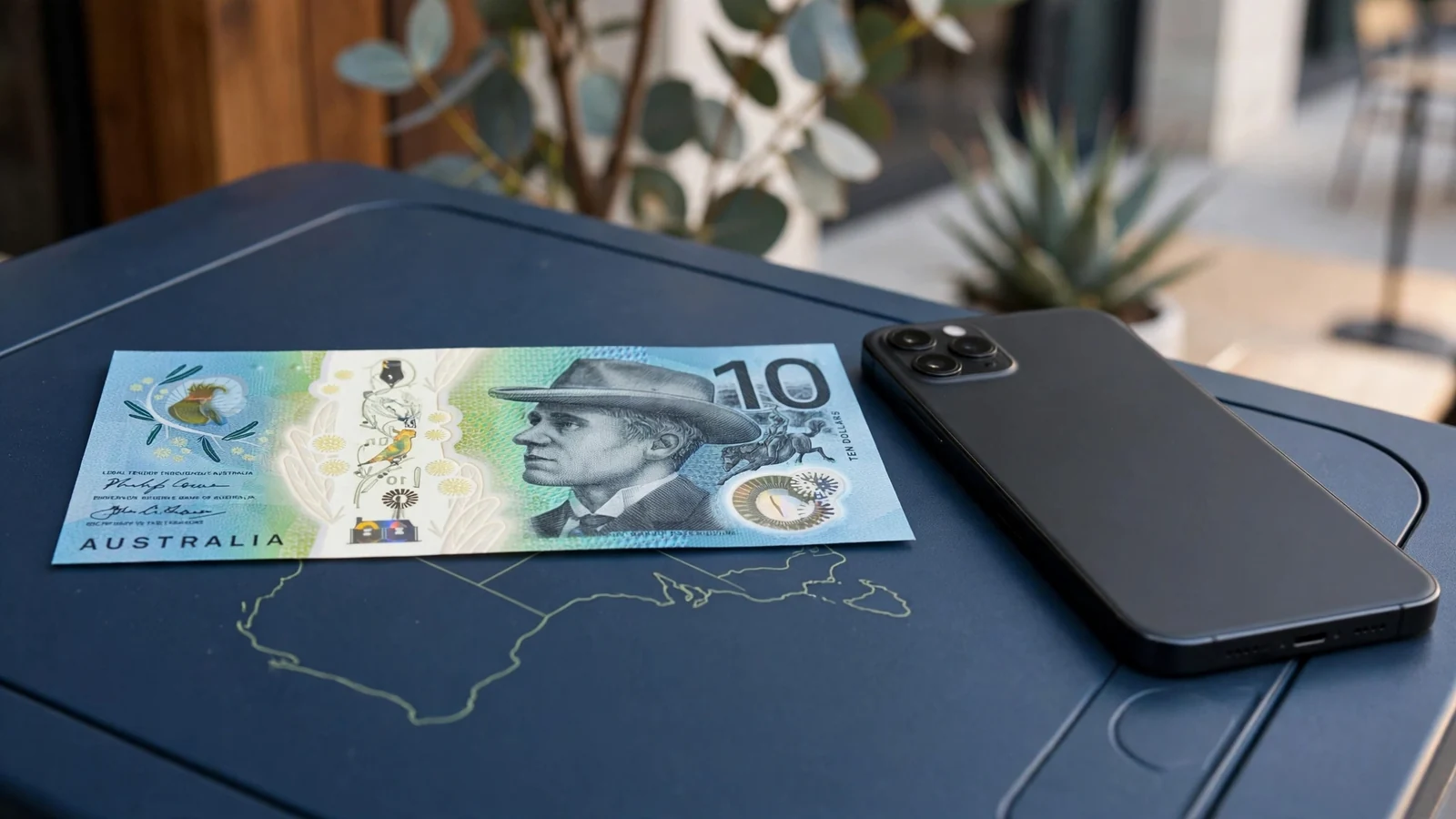
A mobile interface can present a deposit amount without making it available through every payment option. The amount shown for one route should therefore not be assumed to apply to another. Nor does a low operator-set minimum establish that every transaction channel has the same floor. The distinction is between the account’s stated deposit condition and the payment method’s own acceptance threshold.
For an NSW resident or another Australian user, the wording “$5 minimum” should thus be read narrowly: it concerns a stated amount, not a guarantee that a mobile payment of that size can be completed by every route. A description that names a mobile casino but does not specify the payment method leaves the effective minimum unresolved. Mobile access and deposit eligibility are separate features; the latter depends on the operator and payment processor together.
Fees and Delays That Can Undercut a Low Deposit
A nominal $5 deposit can lose much of its practical value when the payment route adds a fee or will not process a transaction of that size. The relevant cost is therefore not only the amount credited to an account, but also any charge attached to sending it and the time before the payment is completed. These factors can make a small first deposit inefficient even where an operator displays a low threshold.

A specialist review reports that Skrill and Neteller deposits to gambling sites may incur fees, and that the minimum transaction amount for these e-wallets is often $10 AUD. Those conditions are not universal: fees and transaction limits can depend on the applicable payment arrangement. Still, where a $10 minimum applies, a $5 payment cannot be made through that route, regardless of a lower amount stated by the operator. If a fee also applies, the amount spent may exceed the sum credited.
Bank transfers present a different drawback. They can take several business days to process, and the sending bank may charge a fee. For a larger payment, that delay may be less consequential; for a small deposit, a charge from the bank can represent a more substantial share of the amount sent. A transfer that remains pending for several business days also ties up the funds for longer than an immediately completed payment would.

The comparison is not simply between an e-wallet and a bank transfer. An e-wallet may be subject to a minimum transaction amount and possible fees, while a bank transfer may carry bank charges and a longer processing period. The costs are not necessarily imposed by the casino itself, so an advertised deposit threshold alone cannot establish the total expense or the time required for funds to arrive.
For a deposit of only a few dollars, these frictions matter because the fixed minimum or charge does not shrink in proportion to the payment. A payment route that is workable for a larger amount may therefore be unsuitable for a low deposit. Where the operator’s stated minimum is $5, that figure should not be treated as evidence that every available method can send exactly that amount without added cost or delay.
The available information supports caution about the costs and timing of these routes, but not a single fee or processing estimate applicable to every transaction. E-wallet terms and bank charges can vary; the practical result depends on the particular payment arrangement. A low advertised minimum, by itself, does not settle whether the deposit can be made economically or promptly.

Why Payment Methods Often Set the Real Minimum
A casino’s stated minimum and the amount a payment route can actually send are separate thresholds. Where the operator’s own minimum is below the payment method’s floor, the method determines the smallest deposit that can be made through it. A nominal $5 minimum therefore does not establish that every available route can fund an account with $5.
Neosurf illustrates the difference. A specialist review reports that purchasing a voucher generally requires at least A$10. Even if an operator accepts a lower deposit, that voucher purchase threshold makes A$10 the effective minimum for a Neosurf-funded transaction. The operator’s terms alone would not reveal this constraint; the voucher’s purchase conditions also matter.
PayID and instant bank transfer show a similar pattern, although the reported range is higher. A specialist review places their typical minimum deposit between A$10 and A$20. That range is a report from one type of source, not a fixed rule for every service or a guarantee about current terms. It nonetheless shows why a search for a casino with a $5 minimum deposit does not, by itself, establish that PayID or bank transfer can be used to make that payment.
Neosurf
Purchasing a voucher generally requires at least A$10, making this the effective minimum for such transactions.
PayID
Typical minimum deposits are reported to be between A$10 and A$20.
Instant Bank Transfer
Typical minimum deposits are reported to be between A$10 and A$20.
The practical comparison is route-specific: a low operator threshold may coexist with a higher payment minimum. The relevant amount is the lowest value accepted by both the operator and the chosen payment channel. Where those amounts differ, the higher one governs that transaction.
Accordingly, claims about a $5 minimum need to be read alongside the payment method’s own terms. Neosurf’s reported voucher floor and the reported PayID or instant-transfer range do not support treating $5 as a universal Australian deposit option. Thresholds can vary by provider and change over time, so the payment route’s current conditions are material to any assessment of the stated minimum.
A $5 First Deposit and Slot Wagering Terms
A small first deposit does not, by itself, indicate how much wagering is required or how quickly it can be completed. Where an offshore promotion is described as applying to a $5 first deposit, the game-weighting rule matters: it determines how much each eligible wager counts toward the wagering requirement. This is a description of offer terms, not an endorsement of an online casino service prohibited from being provided to people in Australia.
In the terms described, pokies contribute 100% of eligible wagers toward wagering requirements. Blackjack and roulette may contribute only 10% or 20%. As a result, the same amount wagered can advance a requirement at very different rates depending on the game category. A promotion that appears to involve a small deposit may therefore still require substantial wagering, particularly if its rules assign lower contributions to the games being played.
The distinction is relevant to any offer framed around a $5 first deposit, including one described as a casino minimum deposit of $5. The deposit amount does not establish the wagering contribution, and a headline figure cannot show whether the associated requirement is practically attainable. The terms must specify which games count and the contribution assigned to each. If that information is absent or ambiguous, the amount of qualifying wagering cannot be determined from the deposit figure alone.

For Australian readers, these mechanics should be understood in the context of the legal framework: online casino-style games, including pokies, are prohibited interactive gambling services when provided to customers in Australia. Describing how game weighting works does not make such a service lawful or constitute a recommendation to use one.
Accordingly, the key distinction is between the nominal first-deposit amount and the contribution rules attached to any wagering requirement. A low figure does not mean that every wager counts equally, or that the requirement will be cleared at the same pace across game types.
PayID, Crypto and the Limits of a $5 AUD Payment
A $5 AUD deposit and a fast cash-out are separate questions. A small amount accepted at deposit does not establish that the same route can be used to return funds, or how quickly a payment would arrive. PayID and cryptocurrency are described as fast cash-out options in a specialist review, but the stated timing depends on the method and account verification.
That review reports that PayID cash-outs often arrive the same day, while Tether (USDT) sent over the TRC-20 network may clear within minutes after verification. These are reported processing times, not a guarantee for every operator or transaction. Account checks and the operator’s own procedures can affect when funds are released.
POLi is not a current Australian payment option: the service shut down in Australia on 30 September 2023. Its former availability should not be taken as evidence that a present-day casino deposit can be made through POLi.
Payment details do not change the legal position. Under the Interactive Gambling Act 2001, providing real-money online casino games to people in Australia is prohibited. A payment route such as PayID or cryptocurrency does not make that service lawful. The Act does not criminalise an individual’s act of placing a bet with an offshore operator, but the distinction between player liability and operator legality remains important when interpreting claims about a $5 minimum deposit casino.
What payment method is best for small deposits in Australia?
Cryptocurrency may allow deposits as low as $5 AUD at some offshore casinos. Neosurf vouchers typically start at $10, while PayID or instant bank transfers commonly require $10–$20.
What is the actual minimum deposit at a no minimum deposit casino in Australia?
Even if the casino sets no minimum, the payment method may impose one; the effective minimum for a usable Australian deposit is commonly $10–$20 AUD. Some offshore operators accept $5 AUD via cryptocurrency.
Are no minimum deposit casinos legal in Australia?
No. The Interactive Gambling Act 2001 prohibits operators from providing certain online casino services to people in Australia, although placing a bet with an offshore operator is not itself a criminal offence for the player.
What is the minimum deposit and wagering requirements?
A usable deposit commonly has an effective minimum of $10–$20 AUD, though some offshore casinos accept $5 via cryptocurrency. Low-deposit bonuses may require wagering of 35×–50× the bonus amount.
Do low deposit bonuses have wagering requirements?
Yes. They may carry wagering requirements of 35×–50× the bonus amount; slots typically count 100%, while blackjack and roulette may count only 10% or 20%.
Created by the ”Rizspin Casino” editorial team.